
Key Takeaways
- Energy-efficient home upgrades — solar, heat pumps, insulation, windows — qualify for tax credits worth 15%–30% of project costs in many countries globally.
- A new House Beautiful report from this week confirmed most homeowners don’t claim these credits simply because they don’t know they exist.
- Product certification documents and receipts are legally required proof — without them, your claim gets rejected even if the upgrade qualifies.
- Timing your upgrades across two tax years can legally maximize your total savings if annual credit caps apply in your country.
- This applies globally — similar programs exist in Germany (KfW/BEG), Canada (Greener Homes Grant), Australia (energy rebate schemes), and the UK (ECO4 scheme).
I came across a House Beautiful report this week with a headline that genuinely annoyed me — in a good way. It said experts are flagging that tax-deductible home improvements that save thousands are being completely ignored by most homeowners. Not because the credits don’t exist. But because nobody told them they did.
That’s the kind of thing that sits with you. So I spent the better part of a day pulling this apart. And honestly? The situation is worse than I expected.
What the House Beautiful Report Actually Revealed About Tax-Deductible Home Improvements
The report — published at the end of June 2026 — cited experts across the renovation and tax advisory space pointing to a consistent pattern: homeowners invest tens of thousands into qualifying upgrades, then walk away leaving the tax benefit completely unclaimed.
We’re not talking about obscure technicalities here. We’re talking about energy-efficient upgrades — things like solar panels, insulation, heat pumps, energy-efficient windows — that explicitly qualify for meaningful tax credits in dozens of countries. Credits worth 15% to 30% of your total project cost.
On a $15,000 heat pump installation, that’s $2,250 to $4,500 back. On a $25,000 solar setup, you could be looking at $7,500. Left on the table. Every year. By millions of households.
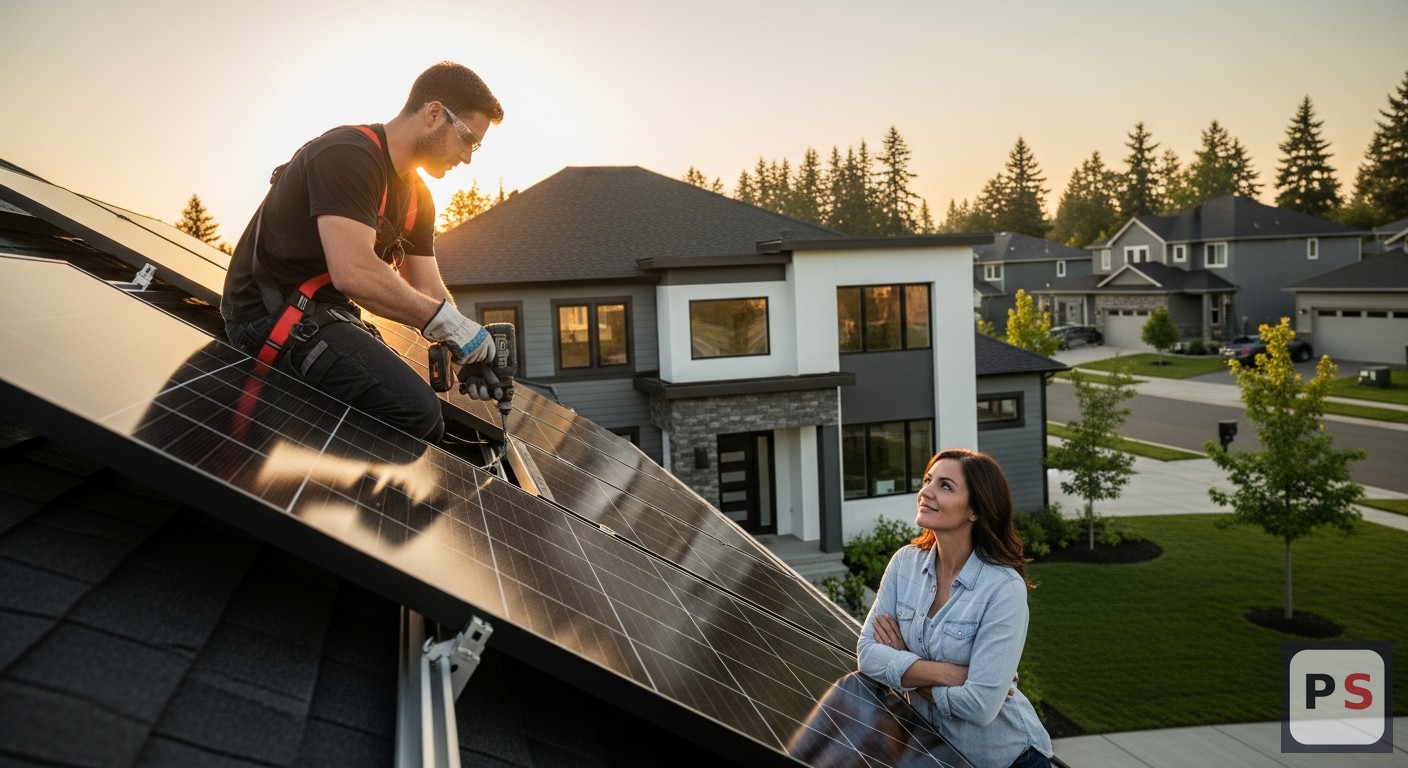
Why does this happen? Turns out it’s a combination of three things: contractors don’t mention it (not their job), tax preparers don’t ask about home upgrades (they assume you’d bring it up), and homeowners assume these programs are only for new builds or wealthy people. None of that is true.
Which Tax-Deductible Home Improvements Actually Qualify — Globally
This is where I want to be specific, because the conversation often gets stuck in one country’s tax code. But tax-deductible home improvements that save thousands are a global phenomenon — just with different names and program structures.
Here’s a rough picture of what’s out there right now:
| Country / Region | Program Name | Max Benefit Range |
|---|---|---|
| United States | Residential Clean Energy Credit | 30% of project cost |
| Germany | BEG / KfW Programs | Up to €75,000 subsidy |
| Canada | Canada Greener Homes Grant | Up to $5,600 CAD grant |
| UK | ECO4 Scheme | Full insulation funding (qualifying households) |
| Australia | State-based energy rebate schemes | $1,000–$4,000 AUD rebate |
The specifics vary. But the core idea is identical everywhere: governments want you to upgrade your home’s energy efficiency, and they’re willing to pay a meaningful chunk of the cost to make it happen. The question is whether you actually claim it.
The Four Upgrades Experts Say Have the Highest Return
Based on the expert commentary from the House Beautiful piece — and confirmed by World Bank reports on residential energy transition — four upgrades keep showing up as the best combination of upfront savings and long-term energy bill reduction.
1. Heat pumps and HVAC upgrades. These replace gas or oil heating systems with electrically powered heating and cooling. Credit rates often hit 30%, and the annual energy savings can run $900–$1,400 depending on your climate and home size. This is probably the single most underrated upgrade on this list.
2. Solar panel systems. Still the headline grabber — and for good reason. A properly sized system typically offsets 70%–100% of your electricity bill, and the tax credit on installation costs is among the most generous in most jurisdictions. The payback period has dropped to 6–9 years in many regions, according to the International Energy Agency’s 2025 report.
3. Insulation and air sealing. This one shocked me when I first looked at the numbers. Insulation has one of the fastest real-world payback periods of any home upgrade — sometimes under three years — because heating and cooling losses through walls and attics are enormous in most homes built before the 1990s. Credit rates typically sit at 15%.
4. Energy-efficient windows and doors. Often done alongside insulation. Replacing single-pane windows with double or triple-glazed units can cut heat loss by 25%–30%. Qualifies for credits in most programs as long as you have the product’s energy certification document.

“The gap isn’t in the programs — it’s in awareness. Most homeowners don’t realize that a receipt and a product certificate are literally all they need to claim thousands back.” — Energy tax consultant quoted in House Beautiful, June 2026
- Los expertos en mejoras del hogar deducibles de impuestos dicen que podrías recuperar miles — La mayoría de los propietarios no tienen ni idea
- O Dia do Prime da Amazon 2026 Está Chegando — E os Truques de Preço Que Usam Podem Te Prejudicar Se Você Não Estiver Preparado
- Scott Galloway dice que ser social es la clave para conseguir empleos — Pero aquí está la parte de la que nadie habla
The Paper Trail Problem — Why Most Claims Get Rejected or Never Filed
Here’s the part that nobody emphasizes enough. Even if you do the right upgrade, you can still miss the credit — or worse, have it rejected — if you don’t have the right documentation.
Most programs globally require two things: proof of payment (receipts, contractor invoices) and proof that the product meets the energy efficiency standard (usually a manufacturer’s certification document or an official energy rating label).
I’m not entirely sure why installers don’t hand these documents over automatically — it might be a training gap, it might be that they just don’t think about the tax side. But the practical result is that homeowners often finish a qualifying install and walk away without the one piece of paper they actually need.
The fix is simple. Before any work starts, ask your contractor: “Can you provide the product’s energy efficiency certification along with the final invoice?” Write it into the contract if you have to. Store everything digitally. Because if you get audited, a photo of a heating unit isn’t proof of anything — the certification document is.
Timing Your Upgrades to Maximize Tax-Deductible Home Improvement Savings
One angle from the expert commentary that genuinely surprised me: in many countries, these credits have annual caps. Meaning if you blow the cap in one calendar year, you can’t claim the excess the following year — it’s just gone.
So if you’re planning multiple upgrades — say, solar panels AND a heat pump — it can actually make financial sense to phase them across two tax years. Install the heat pump in the last quarter of one year, claim that credit. Install the solar in the first quarter of the next year, claim that credit separately.
This might seem overly tactical for something as simple as fixing your house. But on a combined project worth $40,000, the difference between smart timing and no planning could be $3,000–$6,000. That’s a real number.
🏠 Home Upgrade Tax Savings Estimator
Enter your planned renovation to see your estimated annual tax benefit — based on typical energy credit rates used globally.
Estimates based on typical energy tax credit ranges (15%–30%). Consult a local tax advisor for your jurisdiction.
What You Should Actually Do This Week
Look, I’m not a tax advisor and I’m not pretending to be. But based on everything I read this week, here’s the practical reality: if you’ve done any energy-related home upgrade in the last 1–3 years and didn’t specifically check whether it qualifies for a tax credit in your country, there’s a reasonable chance you left money unclaimed.
Step one: pull out the receipts from any renovation involving heating, cooling, windows, insulation, or solar. Step two: check your country’s energy incentive program — the ones listed in the table above are a starting point. Step three: talk to a local tax advisor before your next filing deadline, not after.
The programs exist. The credits are real. The only thing standing between most homeowners and thousands of dollars in savings is the knowledge that it’s even possible to claim them. Now you know.
Last updated: July 01, 2026