
Key Takeaways
- Tax-deductible home improvements that save thousands exist in most countries — but most homeowners never claim them
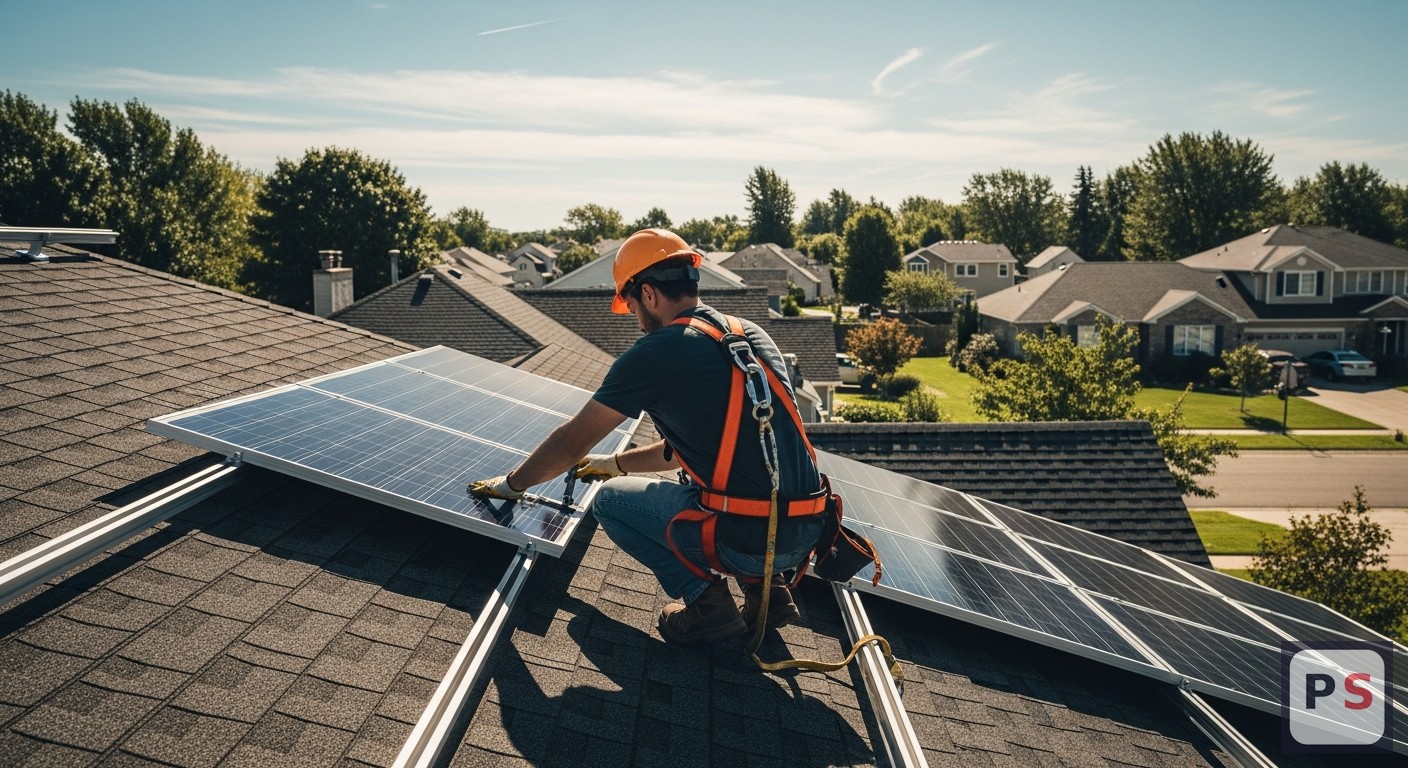
- Energy efficiency upgrades (insulation, solar, windows) are the most commonly eligible category worldwide
- The difference between a tax deduction and a tax credit matters enormously — credits are almost always worth more
- You typically need to keep original invoices and use certified contractors for the claim to be valid
- Some governments allow backdated claims — meaning renovations you already paid for might still qualify
I saw a House Beautiful headline this week — ‘Experts Say These Tax-Deductible Home Improvements Can Help You Get Back THOUSANDS’ — and my first reaction was honestly a mix of excitement and embarrassment. Because I own a home. I renovated a bathroom two years ago. And I claimed absolutely nothing. Zero. So I spent the last two days going down a rabbit hole so you don’t have to make the same mistake I did.
Here’s the thing: tax-deductible home improvements that save thousands aren’t some niche loophole only accountants know about. They’re legitimate government programs that exist in dozens of countries, designed to encourage homeowners to upgrade their properties — especially for energy efficiency. But the information is scattered, jargon-heavy, and nobody really talks about it at dinner parties.
Until now.
Why Most Homeowners Miss These Tax-Deductible Home Improvements

The honest answer? Nobody tells you. You hire a contractor, you pay the bill, you move on. There’s no moment where someone taps you on the shoulder and says ‘hey, by the way, the government might give some of that back.’
According to a 2025 World Bank report on green building incentives, only about 23% of homeowners who are eligible for some form of energy renovation subsidy or tax benefit actually claim it. That’s not because the programs don’t exist — it’s because awareness is genuinely terrible. The programs are marketed to contractors and builders, not to the people writing the cheques.
And the amounts are not trivial. In Germany, homeowners who install heat pumps or upgrade insulation can receive grants up to €15,000 through the BAFA programme. In Canada, the Canada Greener Homes Grant offered up to $5,600 CAD per household for retrofits — and many people applied years after the eligible work was done. In the UK, the government’s ECO4 scheme covers certain energy-efficiency upgrades almost entirely for qualifying homes.
‘Most homeowners think these programs are for rich people or big businesses. In reality, they’re specifically designed for middle-income households doing exactly the kind of renovations that people do every decade anyway.’ — Energy efficiency consultant quoted in a Reuters report, June 2026
What Actually Qualifies as a Tax-Deductible Home Improvement
This is where I had to slow down and actually think clearly, because the category names get confusing fast. So let me break it down simply.
There are two types of financial relief you might get from a home improvement:
Tax deductions reduce your taxable income. So if you earned €60,000 and you deduct €5,000 in eligible renovations, you’re taxed as if you only earned €55,000. The actual money you save depends on your tax rate — maybe €1,000 to €2,000 in real terms.
Tax credits are different and usually better. They reduce the actual tax bill you owe, dollar-for-dollar. A €2,000 credit means €2,000 less you pay. Full stop. No calculation needed.
Governments worldwide tend to favour credits for energy upgrades because they want people to actually do them. So the most valuable programs are almost always the energy-related ones.
| Renovation Type | Typical Eligibility | Potential Saving |
|---|---|---|
| Solar panel installation | Very wide — 40+ countries | Up to 30% of cost |
| Wall/roof insulation | Wide — especially EU countries | €1,000 – €10,000 |
| Energy-efficient windows | Common in cold climates | Variable, up to €3,000 |
| Heat pump installation | EU, UK, Canada, Japan | Up to €15,000 grant |
| Home office construction | Self-employed only (most countries) | Portion of construction cost |
The Receipts Rule — Why People Lose Their Claims
This is the part I had to read twice. Even when a renovation qualifies, the claim gets rejected because of paperwork issues. And I’m not talking about obscure bureaucratic problems — I mean basic stuff that nobody thinks to do at the time.
Most tax authorities worldwide require three things to approve a home improvement deduction or credit: the original itemised invoice from the contractor, proof of payment (bank transfer, not cash), and — this is the one people miss — confirmation that the contractor is certified or registered with the relevant authority.
In France, that’s the RGE certification (Reconnu Garant de l’Environnement). In Germany, contractors need to be listed with the BAFA system. In Australia, eligible installers must be Clean Energy Council accredited. If your contractor isn’t on the right list, your claim disappears regardless of how much you spent.
So the single most important piece of advice before you sign any renovation contract: ask the contractor directly, ‘Are you certified for government incentive schemes?’ A legitimate one will know exactly what you mean.
- L’erreur de l’épargne-retraite qui vide discrètement des millions de personnes en ce moment — Et la plupart n’en ont aucune idée
- Investigas la superación personal todos los días, pero nada cambia — Aquí está la trampa oculta del cerebro que la ciencia acaba de revelar
- Transform Your Home and Your Wallet: Discover Tax-Deductible Improvements That Save You Thousands — Uncover What Most Homeowners Overlook!
Can You Claim for Work You Already Did?
This is what I genuinely didn’t expect to find. Several countries allow what’s called an amended or supplementary tax return, meaning you can go back and claim eligible home improvements from previous years — sometimes up to four years back.
Australia allows amendments to tax returns for up to two years for individuals. Canada’s Greener Homes program accepted retroactive applications. Germany’s BAFA energy grants have at points allowed claims within 12 months of project completion, even after the fact.
I’m not entirely sure this applies universally — tax rules shift constantly — but it’s absolutely worth a 30-minute conversation with a tax advisor to check. If you spent €8,000 on insulation in 2024 and never looked into it, there might still be money sitting there with your name on it.
And honestly? That’s a conversation worth having before your next renovation budget meeting.
What are you planning to do?
Tell us your next move — see what other readers decided.
Tax-Deductible Home Improvements That Save Thousands — What to Do Right Now
I’ll be straight with you: I’m not a tax professional. Don’t make financial decisions based solely on an article you found online — including this one. But here’s the roadmap I’m personally following after this research.
First, I’m pulling out every invoice from the last three years of home work. Second, I’m checking which contractors were certified. Third, I’m booking a one-hour session with a tax advisor — most charge around €50–€150 for a consultation, and if it uncovers even one valid claim, it pays for itself twenty times over.
The system isn’t designed to remind you. The programs are real, the money is real, and — unlike most financial advice — the window to act isn’t permanently open. Some grants close when government budgets run out. Some require pre-approval before work begins.
Don’t wait until your next renovation is finished to ask the question. Ask it first.
Last updated: July 05, 2026