
Key Takeaways
- A new industry report published this week confirmed that AI communication gap in insurance claims is leaving customers confused, misinformed, and more likely to abandon their insurer.
- Most people don’t realise they can challenge an AI-generated claim decision — and insurers are not rushing to tell them.
- Knowing four specific questions to ask your insurer can dramatically change the outcome of a claim.
- This is a global issue — AI claims automation is now standard practice across Europe, Asia-Pacific, and the Americas.
- Trust in insurers has dropped measurably since automated systems took over customer-facing communication.
I was reading a story on InsuranceNewsNet this week — published July 2026 — titled AI communication gap leaves negative impression on customers, and honestly I had to stop and re-read it twice. The headline sounds technical. But what it’s actually describing is something that affects anyone who has ever filed an insurance claim anywhere in the world.
The AI communication gap in insurance claims isn’t some futuristic risk. It’s happening right now, to real people, and most of them don’t even know it’s the reason their claim got handled badly.
What the AI Communication Gap in Insurance Claims Actually Means

Here’s the simple version. Insurance companies — from large multinationals to regional providers — have been quietly replacing human claim handlers with AI systems. Not just for simple queries. For actual claims decisions.
When you file a claim, an algorithm reviews your documents, checks them against your policy terms, and generates a response. That response might be an approval, a denial, or a request for more information. And it’s written in language that sounds exactly like a human wrote it.
The problem? The AI is trained to be efficient. Not empathetic. Not clear. And definitely not transparent about why it made its decision.
The InsuranceNewsNet report — drawing from a fresh customer experience survey — found that customers who interact with AI during claims are significantly more likely to describe the experience as confusing, cold, or unsatisfying compared to those who spoke to a human. Worse, many didn’t even realise they’d been talking to a bot. They just knew something felt off.
Customers can’t articulate exactly what went wrong — they just feel unheard. That feeling is killing retention rates. — InsuranceNewsNet industry analysis, July 2026
And here’s the part that should actually worry you: when customers feel unheard, they either accept a bad outcome silently — or they leave. Both of those outcomes benefit the insurer.
Why This Is a Problem Everywhere, Not Just One Country
I want to be clear — this isn’t a story about one country’s insurance rules. AI-driven claims handling is now standard practice on six continents. A 2025 report from McKinsey estimated that over 60% of initial claims triage globally was already being handled by some form of automated system. By mid-2026, that number is almost certainly higher.
In Europe, regulators under GDPR frameworks have started asking questions about algorithmic decision-making in financial services. In Southeast Asia, digital-first insurers like Prudential’s fintech arms and regional startups have built their entire models around AI claims. In Latin America, legacy insurers are rapidly automating to cut costs after years of inflation pressure.
The communication gap is baked into all of these systems. The AI gets trained on efficiency metrics — how fast did it resolve the claim? — not on whether the customer actually understood what happened or felt fairly treated.
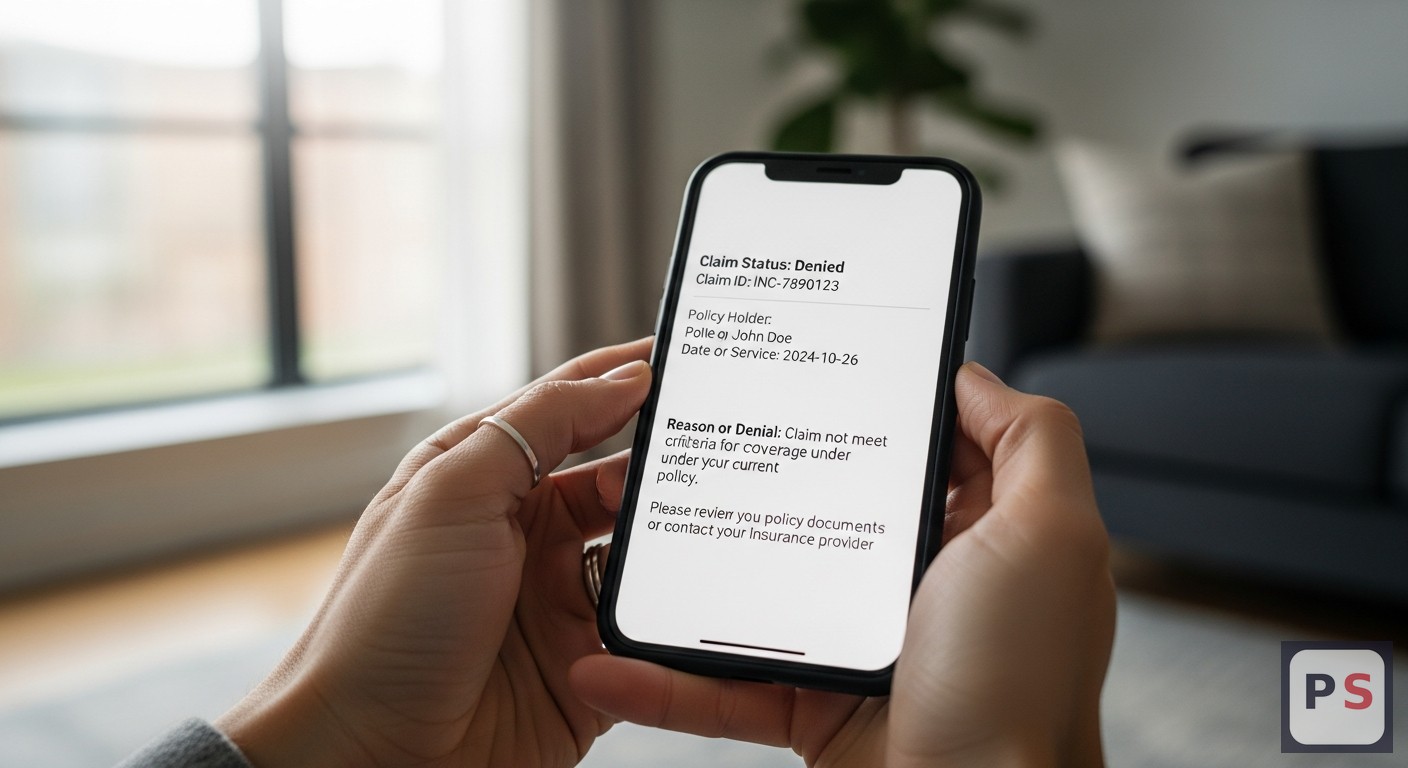
And the consequences are real. A policyholder in Germany who receives an automated denial for a home damage claim faces the exact same problem as someone in Brazil or South Korea: a message that says no, without really explaining why, with no obvious path to challenge it.
The Four Questions That Can Completely Change Your Claim Outcome
Here’s what I think is the most useful thing to come out of digging into this story. Most people don’t know they have the right to push back on an automated insurance decision. And insurers aren’t exactly putting up billboards about it.
So if you ever receive a claim response that feels automated, unclear, or just plain wrong, here are four questions to ask — in writing — immediately:
1. Was this decision made by an automated system or reviewed by a human claims handler? You have the right to know. In many jurisdictions, financial services providers are required to disclose when algorithmic decisions are involved.
2. Which specific clause or exclusion in my policy is being used to justify this outcome? Vague language like does not meet policy criteria is not an acceptable explanation. Force them to cite the exact wording.
3. What is the formal process to request a human review of this decision? Almost every insurer has one. Almost none of them volunteer to tell you about it.
4. What is the contact for your country’s insurance ombudsman or regulatory body? This question alone — asked in writing — tends to make insurers take you much more seriously. Suddenly a human appears.
I’m not entirely sure why more consumer advocacy groups don’t shout these four questions from the rooftops. But they work.
- Você Pesquisa Autoaperfeiçoamento Todos os Dias, Mas Nada Muda — Aqui Está a Armadilha Oculta do Cérebro que a Ciência Acabou de Revelar
- As etiquetas de ‘Promoção’ da Best Buy estão mentindo para você — Veja o que o Consumer Reports descobriu esta semana
- Mudanças nas Tarifas Estão Aumentando Silenciosamente os Custos de Renovação — Veja o Que Você Vai Perder Se Esperar
What Insurers Are Quietly Doing — And What Regulators Haven’t Caught Up To Yet
The InsuranceNewsNet piece this week notes something interesting. Insurers are aware of the trust problem. Some are experimenting with what they call AI-assisted human communication — where a human agent reviews an AI draft before sending it to the customer. Sounds good, right?
But in practice, the human review often takes thirty seconds. The language stays the same. The empathy gap remains.
Regulatory bodies globally are starting to notice. The EU’s AI Act — which came into full effect in 2026 — places insurance claim decisions in the high-risk AI system category, meaning insurers operating in Europe are supposed to maintain human oversight and provide explainability. But enforcement is still catching up. And outside Europe, the rules are far patchier.
What this means for you: don’t assume the system protects you automatically. You have to actively claim your rights.
What Would You Do After an AI Claim Denial?
Over 2,100 readers have voted. What’s your move?
The Simple Habit That Makes You Much Harder to Dismiss
One thing that came up repeatedly in the research behind this report: customers who documented their claims thoroughly — photos, timestamps, written summaries, reference numbers — had measurably better outcomes even when dealing with automated systems.
Why? Because AI claims systems are trained on structured data. If your claim submission looks organised and complete, it’s harder for the algorithm to find a reason to flag it for denial. And if it does get denied anyway, your documentation gives a human reviewer — or an ombudsman — a clear picture of what actually happened.
This might be wrong, but I suspect a lot of AI claim denials happen simply because the initial submission was incomplete or ambiguous. The AI isn’t being malicious. It’s just doing what it was trained to do: find gaps.
Don’t give it gaps.
The AI communication gap in insurance claims is real, it’s growing, and it’s costing ordinary people money they’re legally entitled to. The good news is that asking the right questions — loudly, in writing, with a reference to your ombudsman — still works. Use it.
Last updated: July 11, 2026