
Key Takeaways
- Certain home improvements qualify for federal tax credits worth thousands of dollars — but most homeowners never claim them.
- The IRS Energy Efficient Home Improvement Credit (Section 25C) gives you back 30% of costs, up to $3,200 per year.
- Solar panels fall under a different credit (Section 25D) with no annual cap — a $15,000 install could get you $4,500 back.
- New tariff hikes in 2026 are making renovation materials pricier, making these credits more important than ever.
- You can stack multiple improvements across multiple years to keep hitting the annual cap each year.
I came across a House Beautiful piece this week — I know, not my usual source — but the headline stopped me cold: “Experts Say These Tax-Deductible Home Improvements Can Help You Get Back THOUSANDS.” And my first thought was honestly, wait, I own a home and I had no idea this was actually a real thing. I always assumed home improvements were just… money you spent. Gone. Bye. Turns out I was wrong in a pretty expensive way.
Then I paired that with a Forbes story from the same week about tariff changes pushing renovation costs higher in 2026. Lumber, steel, aluminum, HVAC components — prices are climbing again because of new import tariffs. So the timing on this could not be better. If you’re planning any home work this year, understanding tax-deductible home improvements in 2026 might literally change how you approach the whole project.
What Does “Tax-Deductible Home Improvement” Actually Mean?
Here’s where most people get confused — including me, for years. There are actually two very different things the IRS offers, and people mix them up constantly.
Tax deductions reduce your taxable income. If you earn $80,000 and you deduct $5,000, you’re only taxed on $75,000. Nice, but not dramatic. Tax credits are way better — they reduce your actual tax bill, dollar for dollar. A $2,000 credit means you owe $2,000 less to the IRS. That’s real money back in your pocket.
Most of what House Beautiful’s experts were talking about are tax credits, not deductions. And the main ones come from the Inflation Reduction Act, which — stay with me — is still in effect and still paying out through federal programs called Section 25C and Section 25D.

The Two Tax-Deductible Home Improvements Credits You Need to Know
Think of these like two different coupons — one for energy upgrades inside your house, one specifically for solar.
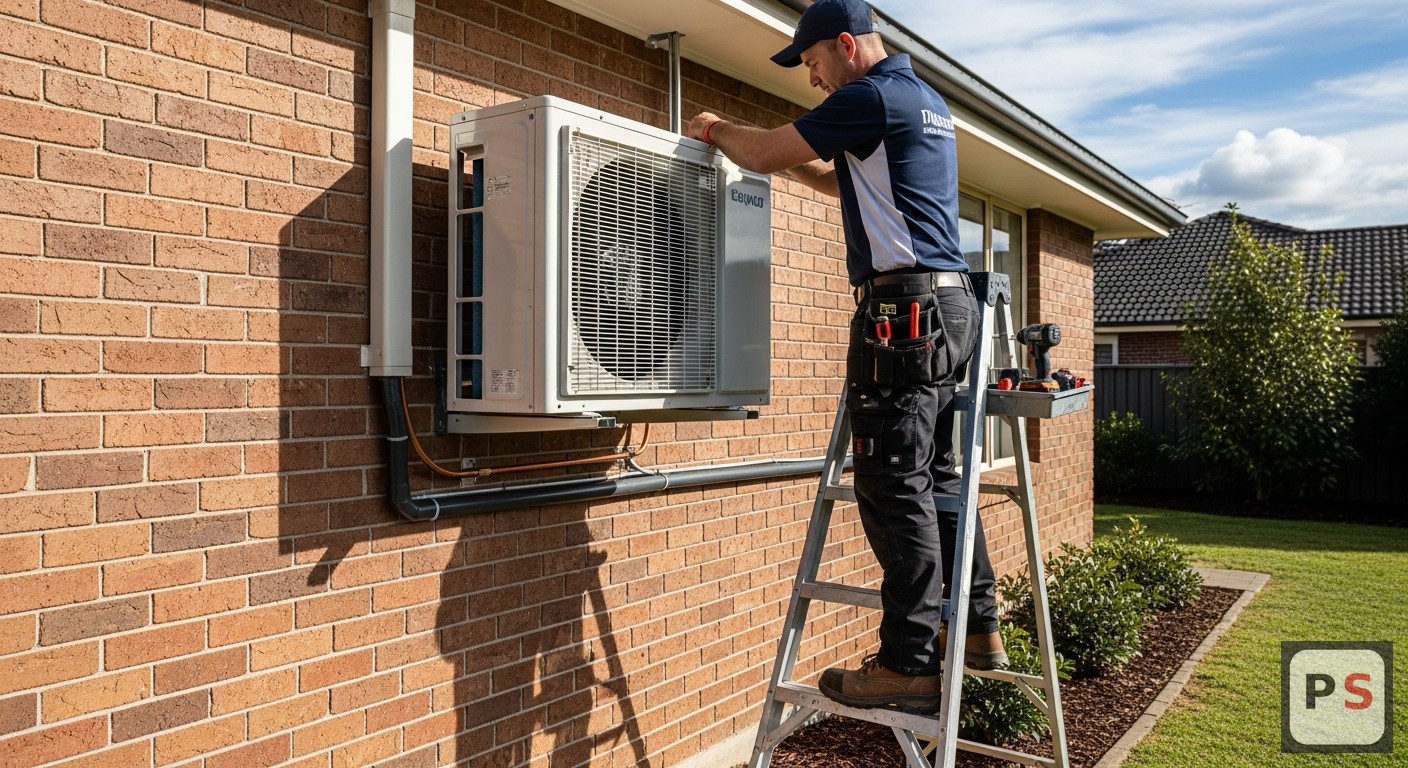
Section 25C — Energy Efficient Home Improvement Credit: This one covers a wide range of upgrades. Heat pumps, central air conditioning units, water heaters, insulation, energy-efficient windows and doors, and even home energy audits. The credit is 30% of what you spend, but there are annual caps per category. Heat pumps get you up to $2,000 back. Windows and doors are capped at $600. Insulation hits $1,200. Total annual cap: $3,200 per year.
Here’s the part people miss: that cap resets every year. So if you spend $10,000 on a heat pump this year and max out at $2,000 back, you can do new windows next year and grab another $600. Smart homeowners are spreading projects across years on purpose just to keep hitting that cap.
Section 25D — Residential Clean Energy Credit: This is the big one. Solar panels, solar water heaters, battery storage systems, geothermal heat pumps. The credit is still 30% with zero annual cap. A $20,000 solar installation? That’s $6,000 straight off your tax bill. Companies like Tesla Solar, Sunrun, and SunPower all market this heavily — and honestly, it’s one of the few times where the marketing actually matches the math.
“Homeowners who bundled a heat pump installation with new insulation in the same tax year saved an average of $2,800 in federal credits alone — before any state rebates.” — Cited by House Beautiful, sourcing EnergySage data, May 2026
Why Tariffs Make This Even More Urgent Right Now
The Forbes piece from this week spelled it out pretty clearly. New tariffs on imported steel, aluminum, and electronics components — many of which go into HVAC systems, windows, and solar equipment — are pushing material costs up by an estimated 8–15% depending on the category.
What that means practically: a heat pump that cost $8,000 to install last year might run $9,000 or more by Q3 2026. Your 30% credit still applies to the higher number — so you’d get $2,000 back either way (that’s the cap), but you’re still spending more out of pocket. The case for acting sooner rather than later, and for maximizing every credit you’re entitled to, is stronger right now than it’s been in a while.
What Actually Qualifies — And What Definitely Doesn’t
This is where people get burned. Not every home improvement counts, even if it sounds energy-related.
| Project | Qualifies? | Max Credit |
|---|---|---|
| Heat pump (air source) | ✅ Yes | $2,000 |
| Solar panels | ✅ Yes (25D) | No cap |
| Energy-efficient windows (ENERGY STAR) | ✅ Yes | $600 |
| New insulation | ✅ Yes | $1,200 |
| Kitchen remodel | ❌ No | — |
| Roof replacement (non-solar) | ❌ Usually no | — |
| Home energy audit | ✅ Yes | $150 |
The key phrase to look for on any product is “ENERGY STAR certified.” That’s the IRS’s shorthand for whether something counts. If your contractor can’t show you the ENERGY STAR certification for the product they’re installing, it won’t qualify — no matter how much they tell you it’s “energy efficient.”
How to Actually Claim These Credits (It’s Simpler Than You Think)
I’ll be honest — I assumed this required some complicated process. It doesn’t. When you file your federal taxes, you fill out IRS Form 5695. That’s literally it. You enter what you spent, on what category, and the form calculates your credit. TurboTax, H&R Block, and FreeTaxUSA all walk you through it automatically if you say you made home improvements.
What you do need to keep: every receipt, every invoice, and the product’s manufacturer certification statement. That last one is important — it’s a document (usually one page) that the manufacturer provides confirming the product meets IRS requirements. Good contractors will hand this to you automatically. If yours doesn’t, ask for it before they leave your driveway.
Also — these are non-refundable credits. That means they can reduce your tax bill to zero, but they won’t generate a refund beyond that. If you owe $1,500 in taxes and your credit is $2,000, you save $1,500 — you don’t get a check for the extra $500. Worth knowing upfront so there are no surprises.
🏠 Home Improvement Tax Credit Estimator
Based on current IRS energy efficiency credits (25C & 25D). This is an estimate — always confirm with a tax pro.
* Credits based on IRS Section 25C (30%, max $3,200/year) and Section 25D (30%, no cap) as of 2026. Caps apply per category.
Tax-Deductible Home Improvements: The Bottom Line in 2026
Here’s what I walked away with after digging into this all week: most homeowners are leaving real money on the table, not because the credits are hard to get but because nobody told them these credits existed. A heat pump swap, new insulation, and ENERGY STAR windows — three very normal home upgrades — could realistically get you $3,200 back in one tax year. Do solar on top of that and you’re looking at $5,000 or more.
With tariffs making materials more expensive by the month, the smart move is to plan now, get certified products, keep your paperwork, and file Form 5695. It’s genuinely one of the few moments where the government is basically offering you money and most people just… don’t take it.
I’m not a tax advisor — seriously, run any big numbers by a CPA before you file. But the general framework here? Pretty well established. Use the calculator above to get a rough idea of what you might be sitting on.
Last updated: May 03, 2026