
Key Takeaways
- A recent House Beautiful investigation found most homeowners are completely unaware they can claim thousands back on qualifying renovations through energy tax credits.
- Solar panel installations qualify for a 30% federal tax credit — on a $15,000 install, that’s $4,500 back.
- Heat pumps, energy-efficient windows, insulation, and EV chargers also qualify — with specific caps per category.
- You must keep the product’s Energy Star certification paperwork — without it, the claim can be rejected.
- Similar rebate and credit schemes exist in the EU, UK, Canada, and Australia — this isn’t a US-only phenomenon.
I saw a headline from House Beautiful this week that genuinely stopped me mid-scroll. Their team had dug into tax-deductible home improvements savings and found something that should make any homeowner feel at least a little cheated — not by the government, but by their own lack of information. Turns out, the average qualifying renovation could get you back thousands in tax credits, and most people just… don’t claim it. Not because the rules are complicated. Just because nobody told them.
So I went down the rabbit hole. Here’s everything I found, broken down as simply as I can make it.
What Are Tax-Deductible Home Improvements and Why Do They Exist?

Governments around the world — particularly in North America, Europe, and Australia — have quietly built financial incentives into the tax code to push homeowners toward energy-efficient upgrades. The logic is simple: if your home wastes less energy, the country burns less fuel overall. So instead of taxing you on that solar install or heat pump, they give you a percentage of the cost back as a credit.
A tax credit is not the same as a tax deduction. This tripped me up at first. A deduction lowers your taxable income. A credit directly reduces the amount of tax you owe — dollar for dollar. If you owe $6,000 in taxes and you have a $4,500 solar credit, you now owe $1,500. That’s genuinely powerful.
In the United States, the main mechanism right now is the Energy Efficient Home Improvement Credit, which was expanded significantly under the Inflation Reduction Act. But similar programs run across the EU through national energy agencies, in the UK via the ECO4 scheme, in Canada through the Greener Homes Grant, and in Australia through state-level retrofitting initiatives.
“The credit isn’t automatic. You have to know it exists, document your purchase correctly, and file the right forms. That’s exactly where most people fall through the cracks.” — House Beautiful, June 2026
Which Tax-Deductible Home Improvements Actually Qualify?
This is where it gets specific — and honestly, more generous than I expected. Here’s what currently qualifies under the US federal credit structure (and has direct parallels in most other developed economies):
| Renovation Type | Credit Rate | Annual Cap |
|---|---|---|
| Solar panels (rooftop) | 30% | No cap |
| Heat pump / HVAC upgrade | 30% | $2,000 |
| Energy-efficient windows & doors | 30% | $600 (windows), $500 (doors) |
| Insulation & air sealing | 30% | $1,200 |
| Home EV charging station | 30% | $1,000 |
| Home energy audit | 30% | $150 |
Do the math on a realistic scenario: you install solar panels for $16,000, replace your old windows for $4,000, and add insulation for $3,000. Your total credit could be $4,800 (solar) + $600 (windows) + $900 (insulation) = $6,300 back. That’s not a small number.
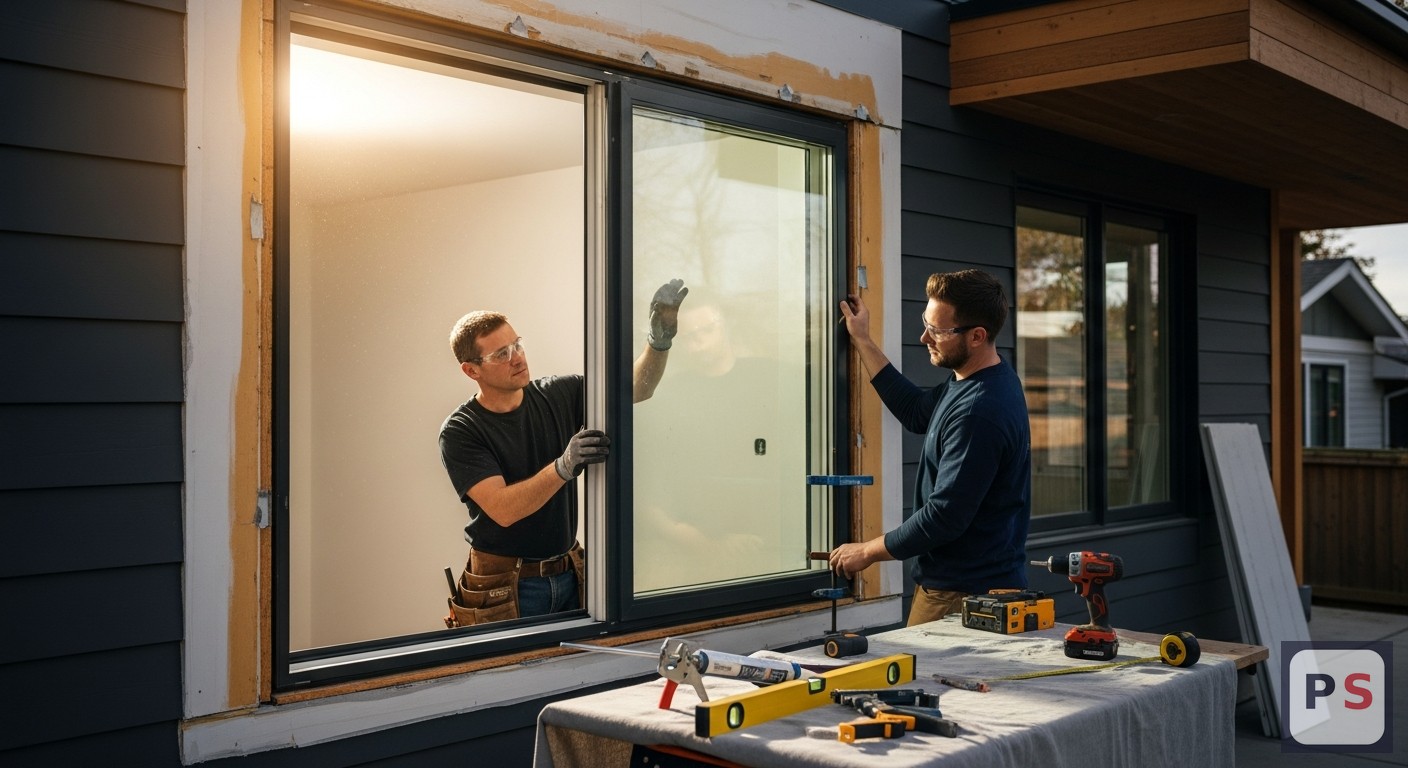
The Part That Trips People Up — Documentation
Here’s where I see people lose money they’d already earned. The credit doesn’t just apply to any renovation — the products you buy must meet specific energy efficiency standards. And you need to prove it.
For most categories, that means the product must be Energy Star certified (or the equivalent certification standard in your country). When you buy the windows, the heat pump, the insulation — you need to keep the product specification sheet that shows it meets the required efficiency rating. Contractors don’t always hand this over automatically. You have to ask for it.
I’m not entirely sure why this documentation step isn’t better communicated at the point of sale, but it’s not. So file everything. The invoice, the product spec sheet, the Energy Star label if it comes with one. Store it digitally.
Also — and this matters — these credits apply to your primary residence in most countries. Second homes and rental properties operate under different rules. And the renovation must be completed within the tax year you’re claiming for.
- O Teste de Compatibilidade Profissional de Bill Gurley Está Viralizando — E a Maioria das Pessoas Está Falhando Sem Saber
- Como a IA para Orçamento e Economia Está Silenciosamente Drenando Sua Privacidade — O Que Você Precisa Saber Antes de Digitar Mais Uma Palavra
- Online Learning Demand Is Exploding — And Colleges Are Quietly Failing the Students Who Sign Up
How This Looks in Other Countries
If you’re reading this outside the US, don’t tune out yet. The mechanisms are different but the money is real everywhere.
In Germany, the Bundesförderung für effiziente Gebäude (BEG) program offers grants of up to 35% of eligible renovation costs for energy-efficient upgrades — and that’s a grant, not just a tax credit. You don’t even need to owe taxes to benefit. The UK’s ECO4 scheme targets lower-income households but has recently expanded eligibility. Canada’s Greener Homes Grant offers up to CAD $5,600 for qualifying upgrades. Australia’s state-level rebate programs vary, but Victoria’s Solar Homes program, for instance, gives rebates of up to AUD $1,400 on solar hot water systems.
The pattern is global: governments want your home to be more efficient, and they’re willing to share the cost. Most people just never ask.
🏠 Home Improvement Tax Savings Calculator
Enter your renovation costs below to estimate your potential tax credit and net savings.
Tax-Deductible Home Improvements Savings — What You Should Do Right Now
If you’re planning any renovation in the next 12 months, run through this checklist before you sign any contractor quote:
1. Confirm the product is certified. Ask your contractor directly whether the product qualifies for energy efficiency credits in your country. Get that in writing if you can.
2. Get the product spec sheet. Before the contractor leaves, ask for the full product documentation showing the efficiency rating. This is your evidence.
3. Check if you can stack credits. In many countries, you can combine a federal or national credit with a local or regional rebate. That’s money on top of money.
4. Time your renovations strategically. Since most credits are capped annually, if you’re planning multiple upgrades, spreading them across two tax years can help you maximize each category’s cap.
5. Talk to a tax professional before filing. I found all this information useful, but the specific forms and limits change year to year. A qualified tax advisor can make sure you’re capturing everything correctly.
The thing that got me about the House Beautiful report is how simple this all is once you know it exists. It’s not a loophole. It’s not a secret scheme. These programs are sitting there in plain view, fully legal, and genuinely designed to help homeowners. The only thing stopping most people from using them is awareness.
And now you have it.
Last updated: June 10, 2026