
Key Takeaways
- Upworthy’s viral piece this week confirmed what behavioral science has shown for years — boring habits that rebuild your life outperform exciting ones every single time.
- A 2010 UCL study found habits take an average of 66 days to form — not 21. That number changes everything.
- Visual habit trackers are trending globally in 2026 because seeing your progress activates the same reward circuits as completing the habit itself.
- The brain stores habits in the basal ganglia — a region that runs on autopilot, completely separate from your willpower.
- Temptation bundling — pairing a boring habit with something enjoyable — is the most underused strategy for making routines stick.
I stumbled on an Upworthy piece earlier this week titled ’14 boring habits that can quietly rebuild your life, according to science’ and honestly, I had to stop scrolling. Because I’ve read roughly a thousand articles about habits. And most of them say the exact same things in slightly different fonts. But this one referenced actual behavioral research — and a few of the findings genuinely surprised me. So I went deeper. Here’s what I found out about the boring habits that rebuild your life, and why the boring ones are the only ones that actually stick.
Why Boring Habits That Rebuild Your Life Actually Work (The Brain Science)

Here’s the thing most productivity content gets completely wrong. They sell you excitement. A new system. A morning routine used by billionaires. A 75-day challenge. And you feel motivated for about four days before real life shows up and dismantles everything.
But neuroscience has a boring explanation for why boring works. Habits — real, automatic habits — are stored in a part of the brain called the basal ganglia. This region operates almost entirely outside conscious thought. It doesn’t care about your motivation. It doesn’t care if you’re tired. It just runs the loop you’ve rehearsed.
The problem? Getting a behavior into the basal ganglia takes repetition. Not inspiration. Not a good journaling session. Just repetition. And boring habits — the ones that don’t require you to feel anything special — are far easier to repeat consistently.
“We are what we repeatedly do. Excellence, then, is not an act, but a habit.” — Will Durant (often misattributed to Aristotle, but the idea holds)
A study published in the European Journal of Social Psychology by Dr. Phillippa Lally at University College London tracked 96 people over 12 weeks and found it took an average of 66 days — not the famous 21 — for a new behavior to become automatic. Some habits took as few as 18 days. Some took 254. The point isn’t to memorize a number. The point is that boring, low-friction habits reach automaticity fastest.
The Visual Habit Tracker Trend — And Why Your Brain Loves It
One thing I found genuinely interesting this week was a separate trend report from Trend Hunter flagging the explosive rise of visual habit trackers globally in 2026. We’re not just talking about apps. We’re talking about printed calendars, hand-drawn grids, whiteboards, and even chains of stickers on paper.
Why are people going analog when everything else is going digital? Turns out, there’s a psychological reason.
When you visually mark off a completed habit — whether that’s an X on a calendar or a filled-in box — your brain gets a small dopamine hit. The same reward circuitry that fires when you complete the habit fires again when you see the visual evidence of your streak. You’re essentially doubling the reward with zero extra effort.
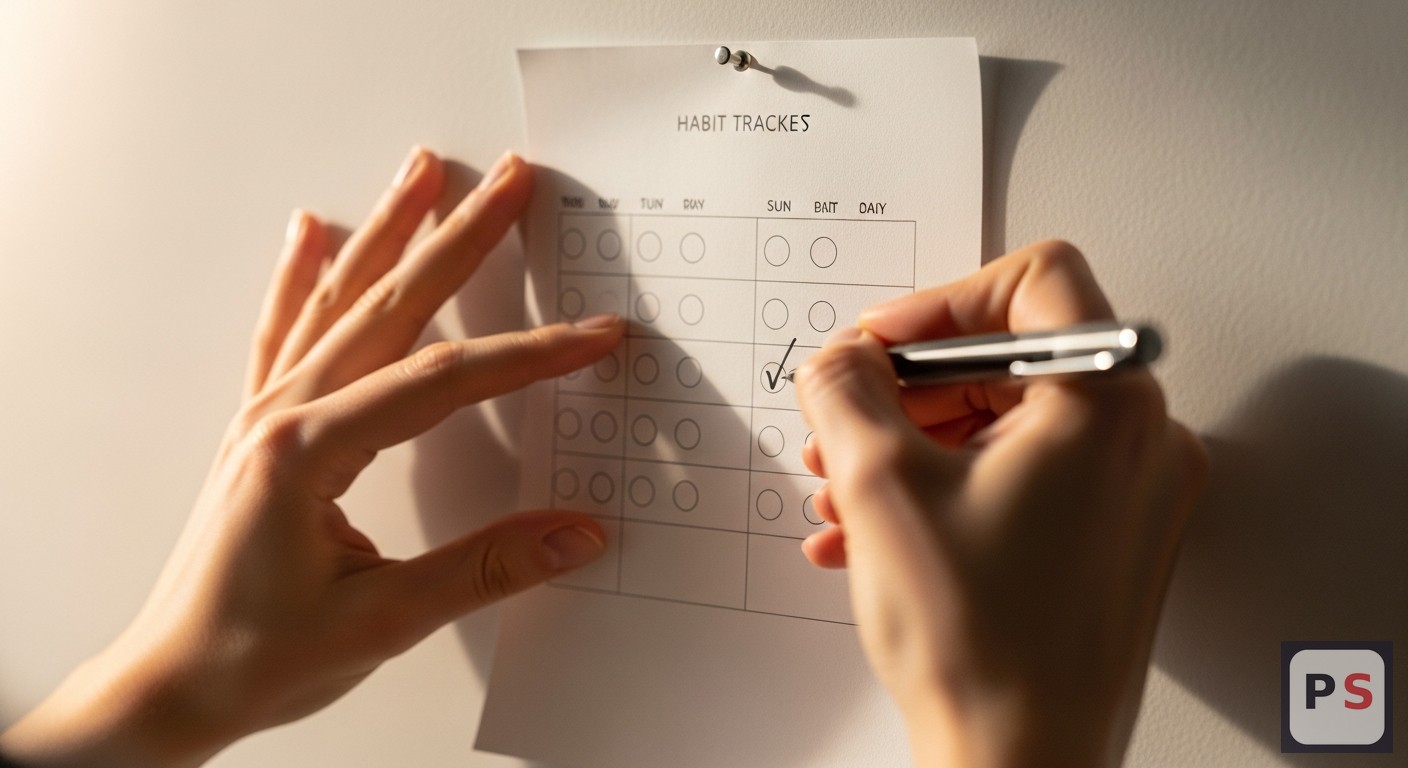
Jerry Seinfeld famously described this as the “don’t break the chain” method — mark every day you write jokes, and your only job becomes not breaking the chain. He probably didn’t know the neuroscience behind it. But it works because it turns a boring habit into a visible identity.
This matters globally. A 2023 WHO report on mental health noted that structured daily routines are among the most effective non-pharmaceutical interventions for reducing anxiety and low-grade depression — especially post-pandemic. The research isn’t new. The mainstream attention to it is.
The 4 Boring Habits That Are Actually Hardest to Start
Looking at the Upworthy list alongside the behavioral research, four habits keep appearing across the most credible studies — and they’re all predictably unglamorous.
| Habit | Why It Works | Time to Automaticity |
|---|---|---|
| Writing 3 things down each morning | Externalizes anxious thoughts, reduces cognitive load | ~21-40 days |
| 10-minute walk with no phone | Activates default mode network, reduces cortisol | ~30-50 days |
| Making your bed immediately after waking | Keystone habit — triggers other orderly behaviors | ~18-28 days |
| Drinking water before caffeine | Rehydrates after sleep, reduces cortisol spike | ~15-25 days |
None of these cost money. None require equipment. None require you to feel motivated. And — this is the part I think gets missed — they compound. Research from Stanford behavioral scientist BJ Fogg, whose work underpins most of what Upworthy cited, shows that small habits don’t stay small. They create identity shifts. When you make your bed every day for 60 days, you stop being ‘someone trying to be disciplined’ and start being ‘a person who keeps their space tidy.’ That identity then bleeds into other areas.
- Dicas Populares de Finanças Pessoais que Você Deveria Ignorar em 2026 — Ramit Sethi Acabou de Revelá-las
- Le piège du ‘Théâtre de la Confiance’ détruit silencieusement des carrières — Et la plupart des gens n’ont même pas conscience que cela arrive
- La tendencia de los ‘Micro-Hábitos’ está reconstruyendo silenciosamente la vida de las personas — Y tú aún no has comenzado
Temptation Bundling — The Cheat Code Nobody Talks About
I’m not entirely sure why this strategy isn’t mentioned in every habits article ever written. It’s simple, it’s backed by research, and it actually works on real humans — not just hypothetical disciplined ones.
Katherine Milkman, a behavioral economist at the Wharton School, coined the term temptation bundling. The idea: you only allow yourself to enjoy something pleasurable while doing the boring habit you want to build. You listen to your favorite podcast only during your daily walk. You watch your favorite show only while folding laundry. You drink your favorite tea only while journaling.
This might sound almost too simple. But in Milkman’s study, participants who used temptation bundling increased gym attendance by 51% over nine weeks. The habit becomes associated with pleasure — and eventually the habit itself becomes the cue for wanting the reward.
The boring habits that rebuild your life aren’t asking you to become a monk. They’re asking you to be slightly strategic about pairing the dull with the enjoyable.
Which boring habit are you actually going to try?
See what other readers picked. Vote once — results update live.
The Honest Reality Check Nobody Gives You
Here’s what I’ll admit: I tried four of these habits for the first time properly about eight weeks ago. I failed two of them multiple times. I broke my writing streak on day 11. I skipped the walk for an entire week when work got chaotic.
And here’s what the research actually says about that: missing one day has no statistically significant effect on habit formation. The same UCL study found that occasional lapses don’t break the automaticity process. What breaks it is quitting entirely after the lapse.
So the most scientifically accurate advice about boring habits that rebuild your life is this: miss a day, then immediately resume. The chain doesn’t need to be perfect. It just needs to keep going.
The boring habits work because they’re designed for real human beings who have bad days, chaotic weeks, and absolutely zero motivation at 7am on a Tuesday. That’s the whole point. They don’t need your best self. They just need your minimum viable self — and that’s a person all of us can be.
Last updated: June 15, 2026