
Key Takeaways
- New tariff changes are raising renovation costs by 18–28% on materials like steel, lumber, vinyl, and ceramic tile — confirmed by Forbes this week.
- The impact is global: homeowners across Europe, Asia, and the Americas are all seeing higher contractor quotes in 2026.
- Waiting even 3–6 months to renovate could add thousands to your total bill, according to current NAHB projections.
- Home improvement loans can be a strategic tool to lock in current material pricing before costs rise further.
- Always get a signed, itemised contract before work begins — it’s your best legal protection against mid-project price hikes.
I came across a Forbes report this week and honestly did a double-take. It said tariff changes raising renovation costs could force millions of homeowners worldwide to either delay projects, take on debt, or dramatically shrink their renovation scope. And the thing is — most people have no idea this is already happening to them right now.
I had a friend text me last Thursday asking why her kitchen quote jumped by nearly €8,000 compared to what she got six months ago. Same contractor. Same scope. She thought someone was trying to rip her off. Turns out, no one was ripping her off. The materials just cost that much more now.
Why Tariff Changes Are Raising Renovation Costs So Fast

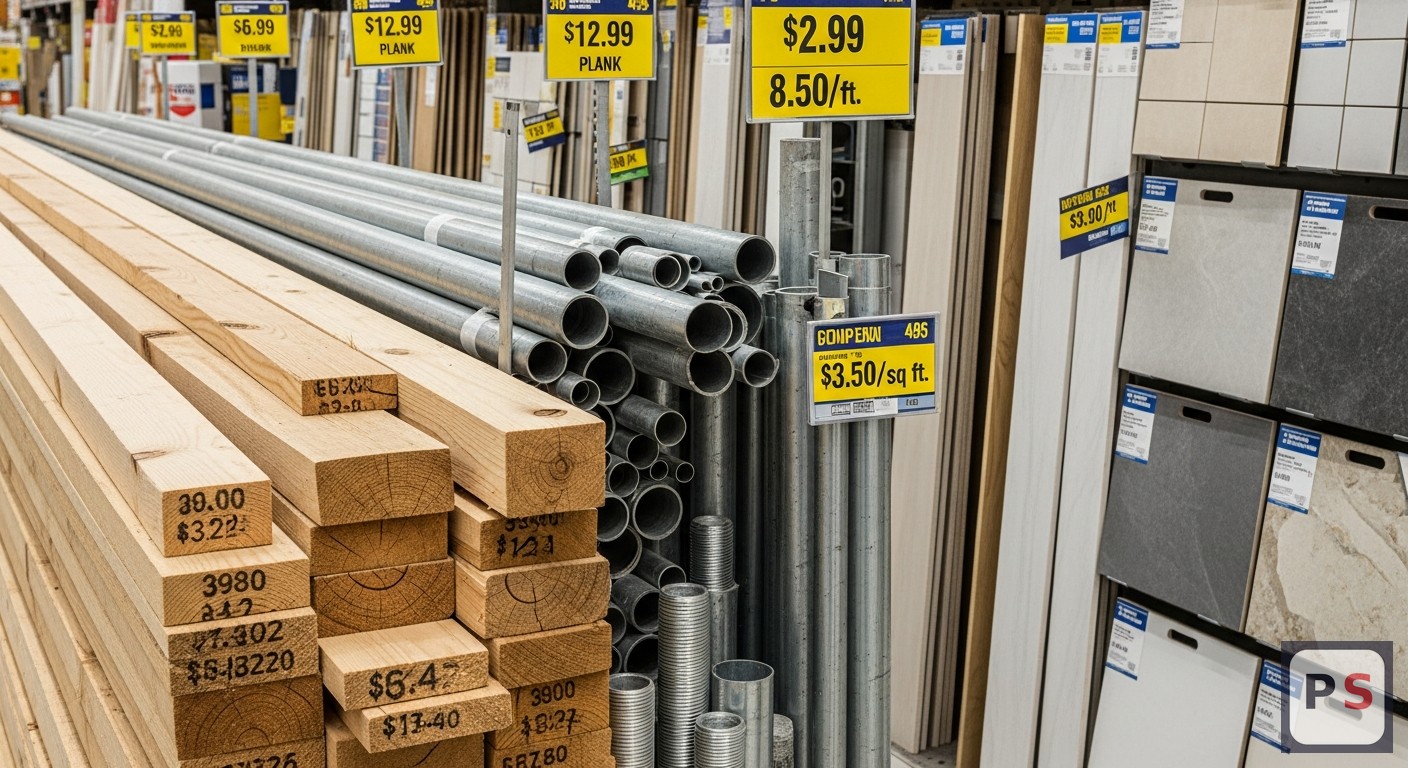
Here’s the short version: a lot of construction materials — lumber, steel, aluminium, ceramic tile, vinyl flooring — are imported across borders. When governments apply tariffs (basically taxes on imported goods), the companies importing those materials pass the cost directly to buyers. That means contractors, then homeowners.
According to the Forbes article published this week, and separately confirmed by data from the National Association of Home Builders (NAHB), material costs have already risen between 18% and 28% depending on the category, compared to early 2025. Exterior siding is at the top of that range. Kitchen materials and flooring aren’t far behind.
And here’s the part that really got me — this isn’t just a North American problem. Supply chains for construction materials are deeply global. A tariff dispute between major economies ripples into material prices in Germany, Australia, Brazil, and South Korea. Builders in Lisbon and contractors in Singapore are reading the same price sheets.
“Material costs in the residential construction sector have climbed at a pace not seen since the post-pandemic supply shock — and this time, the driver is policy, not a health crisis.” — NAHB Economic Analysis, June 2026
The difference between now and the COVID-era supply shock is exactly that. Back then it was unpredictable. This time, it’s a policy decision — which means it can escalate further, and it probably will.
What This Actually Looks Like on a Real Renovation Budget
Let me make this concrete. Say you’re planning a bathroom renovation with a base budget of $15,000 (USD equivalent). Materials usually make up about 55% of any renovation budget — so roughly $8,250 of that is materials.
At an 18% tariff-driven increase on those materials, you’re now looking at an extra $1,485 on top. That might sound manageable. But a kitchen? If your base budget is $40,000, you’re potentially absorbing $4,840 in added costs — and that’s before we factor in delayed timelines, which push labour costs up too.
Now here’s the part Forbes specifically flagged: if you wait 6 months to start, current trend data suggests that figure could be another 11% higher than it is today. Waiting to save up could actually cost you more than starting now with financing.
| Renovation Type | Est. Tariff Impact | Most Affected Materials |
|---|---|---|
| Kitchen Remodel | +22% | Steel appliances, cabinets, tile |
| Bathroom Upgrade | +18% | Fixtures, ceramic tile, piping |
| Flooring Replacement | +25% | Vinyl plank, hardwood, laminate |
| Exterior / Siding | +28% | Vinyl siding, steel framing |
| Structural / Additions | +20% | Lumber, concrete, steel rebar |
How Home Improvement Loans Fit Into This (And When They Actually Make Sense)
Forbes’ angle on this was specifically about home improvement loans as a response strategy. I’m not a financial advisor — I want to be upfront about that — but the logic they laid out made sense to me.
If material costs are rising faster than the interest rate on a home improvement loan, then borrowing now to renovate now could cost you less than paying cash later. That’s a real calculation worth running. And if your renovation is for something that improves energy efficiency or adds genuine resale value, the maths gets even more favourable.
The key thing to understand is that a home improvement loan is separate from your mortgage. It’s typically an unsecured personal loan used specifically for renovation work. You’re not refinancing your home. You’re not putting your property up as collateral in most cases. It’s closer to a car loan than a mortgage — and some lenders offer fixed rates that let you predict the exact monthly cost.
That said — and this is my honest take — a loan only makes sense if you’ve already got a solid contractor quote locked in writing. Borrowing for a renovation without a fixed contract is like booking a flight without knowing the destination. Please don’t do that.
- Die ‘Verkaufspreise’ von Best Buy sind nicht das, was sie scheinen – Hier ist, was Sie tatsächlich verlieren
- Você está confiando em influenciadores de saúde com o seu corpo — o Pew Research acabou de revelar o quão perigoso isso é
- Las ‘ofertas’ de Best Buy no son lo que parecen — Descubre lo que realmente estás perdiendo
Three Things You Should Do Before Signing Anything
I spent a couple of hours going through contractor advice forums and trade publications after reading the Forbes piece, and the same advice kept coming up. Here’s what actually matters right now.
First, get multiple quotes and ask each contractor to itemise materials separately. This lets you spot where the tariff impact is hitting hardest — and compare contractors who source materials differently. One contractor might use local suppliers for certain items, which changes the equation entirely.
Second — and this one surprised me — ask for a quote that’s valid for at least 60 days. Some contractors will do this with a small holding deposit. This is essentially locking in today’s material pricing. Worth asking about directly.
Third, make sure your contract specifies a fixed total price, not a ‘cost plus’ arrangement. A cost-plus contract (where you agree to pay whatever materials end up costing plus a labour margin) leaves you completely exposed to further tariff increases mid-project. Fixed price means exactly that.
Renovation Cost Impact Simulator
See how tariff-driven price increases affect your total renovation budget over time.
Estimates based on industry average tariff impact rates as reported by Forbes and NAHB, June 2026.
The Bigger Picture: Tariff Changes Raising Renovation Costs Won’t Reverse Quickly
I want to be honest here: I don’t know when or if these tariff pressures ease. Honestly, nobody does. Trade policy can shift with a government announcement on any given Tuesday. But what we know from current data — as of June 2026 — is that the upward pressure on material costs is real, it’s documented, and it’s global.
The NAHB data I referenced earlier suggests there’s no significant reversal expected in the near term. If anything, analysts quoted in the Forbes piece expect another uptick before the end of 2026 if current trade negotiations stall.
What I took away from all of this — and what I’d pass along to anyone planning a reno right now — is that inaction has a cost. Waiting to feel more comfortable financially might feel safer. But if the materials for your project go up another 10% while you’re waiting, you’ve effectively spent that money already. You just haven’t noticed yet.
Plan carefully, get everything in writing, and run the numbers honestly before deciding to wait. That’s really the whole story here.
Last updated: June 16, 2026