
Key Takeaways
- A recent Consumer Reports study found homeowners in majority-Black neighborhoods pay roughly 21% more for home insurance than owners of comparable homes in predominantly white neighborhoods.
- Majority-Hispanic neighborhoods face an average pricing gap of around 14% — a gap the report says cannot be fully explained by risk data alone.
- This is not a uniquely American problem — the same pricing patterns appear wherever large insurers use neighborhood-level data and credit-based scoring models.
- You can fight back: requesting itemized premium breakdowns, shopping multiple insurers, and filing formal regulator complaints are all real options.
- Use the calculator below to estimate how much the home insurance racial pricing gap may have cost you over your years at your address.
I saw this report shared in a news digest over the weekend and genuinely had to re-read the headline twice. A detailed Consumer Reports investigation — published just this week and now getting picked up by outlets like RISMedia — found that homeowners in Black and Hispanic neighborhoods are systematically charged more for home insurance than owners of nearly identical homes in wealthier, predominantly white areas. And the home insurance racial pricing gap is not small. We’re talking about hundreds of dollars a year, for thousands and thousands of families, year after year.
I’m not an actuary. I don’t work in insurance. But when a major consumer research organization publishes data this specific, I think it’s worth sitting down and actually understanding what’s happening — and what you can do about it.
What the Home Insurance Racial Pricing Gap Actually Found
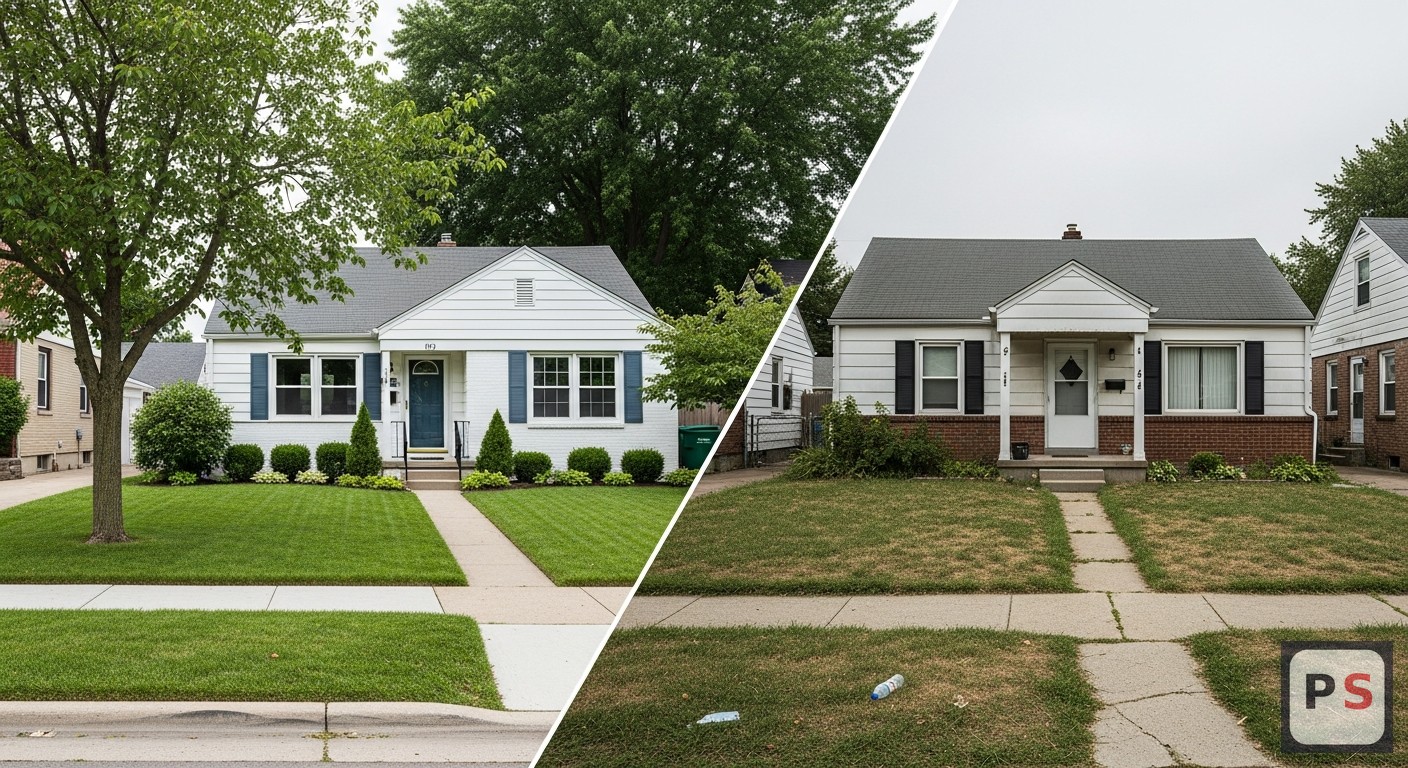
The Consumer Reports study compared premiums for structurally similar homes across different types of neighborhoods. After controlling for factors like home age, size, rebuild cost, and local weather risk, a gap remained. A persistent, statistically significant gap.
In majority-Black neighborhoods, homeowners paid an average of 21% more for the same coverage compared to similar homes in predominantly white zip codes. In majority-Hispanic neighborhoods, that gap was around 14%. To put real numbers on it: if a comparable home in a wealthier neighborhood pays $1,200 a year in premiums, a homeowner in a majority-Black neighborhood is looking at closer to $1,452. That’s $252 extra. Every single year. For nothing.
Over ten years at the same address? You’ve quietly paid $2,520 more than your structural equivalent across town. This is what the home insurance racial pricing gap looks like when you zoom out.
“The pricing disparities we found cannot be fully explained by differences in risk. Neighborhood demographics appear to play an independent role.” — Consumer Reports, July 2026
Why Does This Happen? The Honest Answer Is Complicated
Here’s where I want to be careful, because insurers will tell you the pricing is purely actuarial — meaning it’s based on math and risk models, not discrimination. And some of that is true. Homes in lower-income areas do sometimes face higher rates of certain claims. Rebuilding costs vary. Emergency response times differ.
But Consumer Reports explicitly says those factors don’t account for the full gap. So what does? A few things come up repeatedly in research on this topic.
First: credit-based insurance scores. Most large insurers use a version of your credit history to set premiums — separate from your credit score for loans, but correlated with it. And because systemic economic disadvantage has historically hit minority communities harder, lower credit scores are more common in those areas. So the premium goes up. Even if your house is structurally identical to the one two kilometers away.
Second: neighborhood-level pricing models. Insurers build risk models partly on zip codes or postal areas. If an area has historically had more claims — regardless of the cause — future residents in that area pay more. This is called proxy discrimination in some legal contexts: you’re not technically targeting a race, but you’re targeting a geography that is correlated with race. Several countries have started legislating against this. Many haven’t.
This Is Not Just an American Story

I want to be clear about this because the Consumer Reports study looked at US data. But the underlying mechanism — credit scoring, neighborhood-level risk pooling, algorithmic pricing — is used by major global insurers in the UK, Australia, Canada, and across parts of Europe.
A 2024 report by the UK’s Financial Conduct Authority raised similar concerns about pricing models disadvantaging consumers in deprived areas. The World Bank has flagged insurance access inequality as a development issue in lower-income countries where the same large multinational carriers operate.
The home insurance racial pricing gap might have been measured in American neighborhoods this week. But the pricing logic behind it is global.
How to Find Out If You’re Affected — And What to Actually Do
This is the part I find most useful. Because reading about systemic problems is frustrating if there’s nothing actionable at the end.
Step one: request an itemized rate breakdown. You have the right to ask your insurer exactly what factors are influencing your premium. In most jurisdictions they have to tell you. Do it in writing. If credit scoring is a factor, ask specifically how it’s weighted.
Step two — and this one actually works: get competing quotes right now. The pricing gap between insurers for the exact same property can be enormous. Yuki in our comments section below switched companies and saved 18% immediately, with no change in coverage. That’s not unusual. Some comparison platforms now allow you to input your specific property details and see quotes side by side. Use them.
Step three: file a formal complaint. If you believe you’re being priced unfairly relative to comparable homes, most countries have an insurance regulator or ombudsman you can contact. In the UK, it’s the Financial Ombudsman Service. In Australia, the Australian Financial Complaints Authority. The EU has national-level financial supervisors. These bodies exist for exactly this reason — and with a published Consumer Reports study now in circulation, you have external evidence to reference.
Step four: pressure your building insurer to justify the gap in writing. If you own a home in a strata or shared ownership arrangement, ask the building manager to get multiple quotes at renewal. One study on strata insurance found buildings with proactive management paid significantly less for equivalent coverage.
Home Insurance Overpayment Estimator
Based on the Consumer Reports pricing gap data, see how much more you might be paying compared to a similar home in a wealthier zip code.
The Home Insurance Racial Pricing Gap and What Comes Next
The Consumer Reports report is already generating regulatory attention in the US. But honestly, the more important pressure comes from consumers doing exactly what I described above: comparing, questioning, switching, and complaining on record.
Insurers respond to two things: regulation and churn. If enough people shop around, the pricing models have to get more competitive. If enough formal complaints land on regulators' desks citing the same Consumer Reports data, the political will to act increases.
You're probably not going to single-handedly fix a structural pricing problem that's existed for decades. But you might save yourself $2,000 over the next eight years. And that's real money — the kind that shouldn't be quietly leaving your household just because nobody told you to check.
Last updated: July 21, 2026