
Key Takeaways
- Tax-deductible home improvements savings are real and global — but only specific project types qualify, not all renovations
- Energy-efficient upgrades (solar, insulation, heat pumps) are the most universally recognized category for tax deductions worldwide
- Medical home modifications — like wheelchair ramps and grab rails — often qualify too, with documentation from a doctor
- Keeping every receipt, invoice, and contractor record is non-negotiable if you want to actually claim anything
- Getting a professional energy audit before renovating can unlock bigger savings by identifying the highest-impact upgrades first
I saw a headline from House Beautiful this week — “Experts Say These Tax-Deductible Home Improvements Can Help You Get Back THOUSANDS” — and honestly, my first reaction was: is this just click-bait? But I spent a few hours digging into it, and turns out the answer is mostly no. There are genuine, government-backed ways that tax-deductible home improvements savings can put real money back in your pocket. The catch? Most homeowners have absolutely no idea which projects qualify, which don’t, and — crucially — how to actually document them properly to claim anything.
So I broke it all down. Here’s what I found.
Why Tax-Deductible Home Improvements Savings Even Exist

Here’s the thing that surprised me most. These deductions aren’t some loophole governments forgot to close. They’re intentional. Most national governments — from Germany to Canada to Australia — have actively created schemes to incentivize homeowners to upgrade to more energy-efficient, safer, or more accessible housing. The logic is straightforward: if private citizens make these upgrades, governments spend less on public energy infrastructure and healthcare systems.
According to a World Bank report from 2025, buildings account for roughly 40% of global energy consumption. That number shocked me. And governments know it. So they dangle tax benefits in front of homeowners to quietly push the transition to greener homes. You’re basically getting paid — via tax relief — to do something that benefits the entire grid.
The key distinction that almost nobody explains clearly: there’s a difference between a tax deduction (which reduces the income you’re taxed on) and a tax credit (which directly reduces the tax bill itself). Credits are generally more valuable. Many energy upgrades qualify for credits, not just deductions — meaning the benefit is dollar-for-dollar, not just a percentage.
“The average homeowner leaves between $1,200 and $3,500 in unclaimed renovation-related tax benefits on the table every year — simply because they didn’t know what to document.” — House Beautiful, citing tax consultants, May 2026
Which Projects Actually Qualify for Tax-Deductible Home Improvements Savings
This is where most articles get vague and useless. Let me be specific.
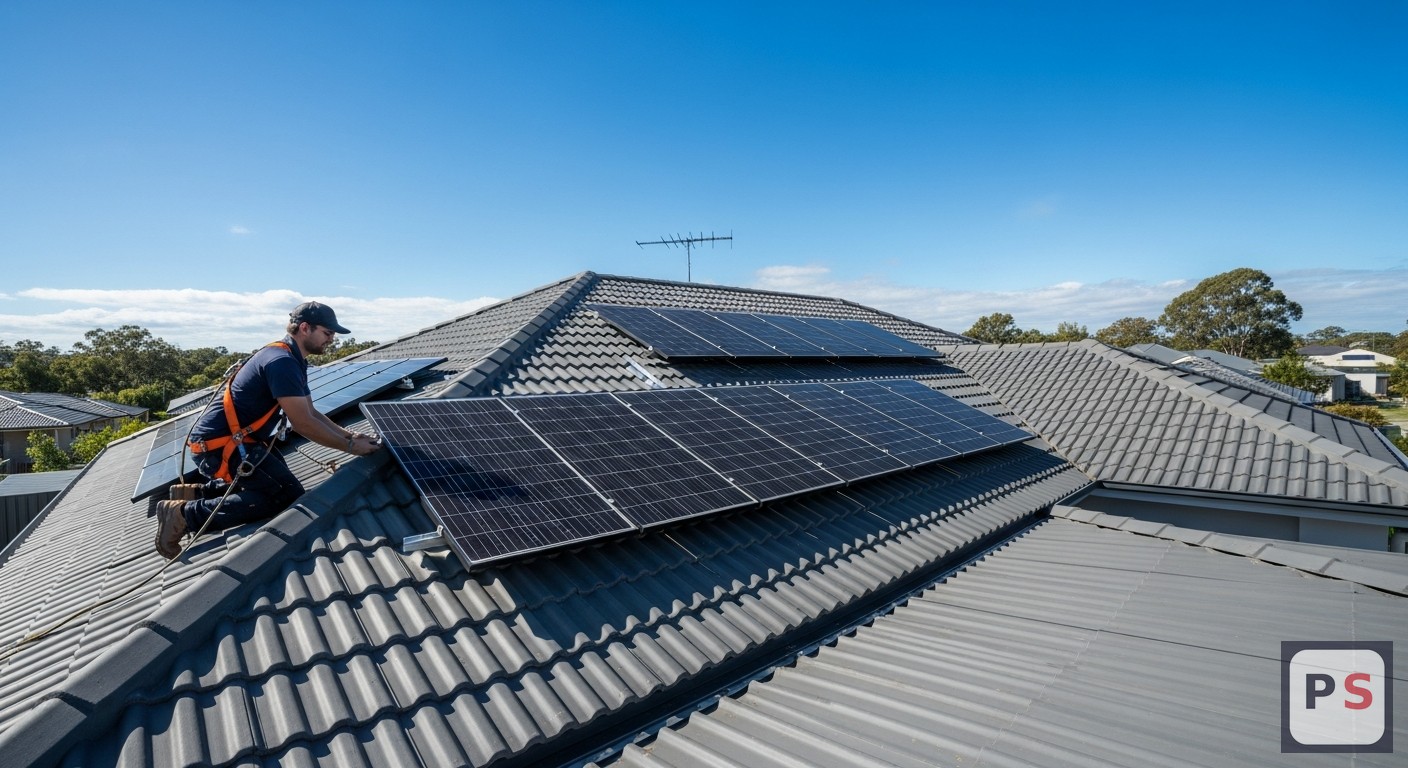
Energy-efficient upgrades are the biggest category globally. Solar panel installation, heat pump systems, upgraded insulation, and energy-efficient windows and doors are recognized in most countries’ tax codes as eligible improvements. In the European Union, the Energy Performance of Buildings Directive pushes member states to offer rebates and tax reliefs for exactly these types of upgrades. In Canada, the Greener Homes initiative offers up to CAD $5,600 in grants. In Australia, state-by-state rebate schemes cover solar and battery storage.
The numbers are meaningful. A heat pump system costing around $5,500 might earn you $1,500 back through available credits. Solar panels at $8,000 could return $2,400 or more, depending on your jurisdiction. These aren’t hypothetical figures — they’re ballpark estimates based on reported averages across multiple schemes I looked at.
Medical home modifications are the second major category. And honestly, this one gets almost zero coverage. If you or a family member has a documented medical condition that requires home changes — think wheelchair ramps, widened doorways, roll-in showers, grab bars, stairlifts — many governments allow you to deduct these costs as medical expenses. The critical detail: you usually need a letter from a licensed physician confirming the medical necessity. Without that letter, you have nothing.
Home office upgrades have also expanded as a category since remote work normalized globally. But this one is trickier — rules vary enormously by country, and some require you to have a dedicated, exclusively-used workspace. Worth checking your local rules before assuming it applies.
What doesn’t qualify? This is equally important to understand. A brand new luxury kitchen? Generally no. Hardwood floors? No. A swimming pool? Definitely not. Cosmetic renovations that improve aesthetics or personal enjoyment but don’t contribute to energy efficiency, medical accessibility, or structural safety typically don’t qualify anywhere.
| Renovation Type | Typically Qualifies? | Estimated Benefit |
|---|---|---|
| Solar panel installation | ✅ Yes | Up to 30% back |
| Insulation upgrade | ✅ Yes | $300–$1,200 |
| Heat pump system | ✅ Yes | $1,000–$2,000 |
| Wheelchair ramp (with medical doc) | ✅ Yes | Full cost, often |
| New luxury kitchen | ❌ No | $0 |
| Swimming pool | ❌ No | $0 |
The Documentation Problem Nobody Warns You About
Here’s where people lose everything. You can do every qualifying renovation perfectly, but if you can’t prove it — receipts, contractor invoices, product specification sheets showing energy ratings — you get nothing. Tax authorities in every country require documentation. Not just a vague memory of what you spent.
My suggestion: the moment any renovation is complete, photograph every receipt and invoice immediately and upload it to cloud storage. Create a folder called something like “Home Tax Records 2026.” It takes five minutes and could save you thousands. And if you’re planning a renovation right now, ask your contractor upfront to provide an invoice that explicitly names the energy rating or efficiency specification of whatever they’re installing. Generic invoices that just say “installation service” are often insufficient.
- A Uber Está Silenciosamente Tentando Limitar o Que Você Pode Reivindicar Após um Acidente — Aqui Está o Que Você Pode Perder
- Le test simple de Bill Gurley révèle si vous êtes vraiment fait pour votre emploi de rêve — La plupart des gens échouent
- Was du beim Fragen zu persönlicher Finanzhilfe an KI nicht teilen solltest – Die meisten Menschen wissen das nicht
The Step Nobody Takes: Get an Energy Audit First
This one genuinely changed how I think about renovations. Before spending $8,000 on solar panels, getting a professional home energy audit — which typically costs between $100 and $400, and is sometimes offered free by utility companies — tells you exactly which upgrades will have the biggest impact on your specific home. An auditor might find that your insulation is so poor that solar panels won’t help you as much as fixing the walls first.
And here’s the bonus: in several countries, the audit itself is partly reimbursable or tax-deductible. So you pay a few hundred dollars, get a roadmap for maximizing your tax-deductible home improvements savings, and potentially claim part of that audit cost back too.
🏠 Renovation Consequence Simulator
Pick a home improvement project and see its financial impact over time.
What To Actually Do This Week
I’m not going to tell you to just “consult a professional” and leave it there. That’s lazy advice. Here’s what’s actually actionable right now.
First, look up your country’s energy efficiency grant scheme — search your country name plus “home energy improvement grant 2026” and you’ll find the current active programs. Second, if you have elderly parents living with you or a family member with mobility needs, talk to their doctor this month about getting a formal letter documenting the need for home modifications. Third, pull out any renovation receipts from the past 12 months and check whether the work might qualify — even if you didn’t know at the time, the documentation might already exist.
And honestly? Run the simulator above. Plug in a project you’ve been putting off. The 12-month numbers might surprise you enough to actually make the call this week.
Last updated: May 26, 2026