Key Takeaways
- A ConsumerAffairs investigation published this week found that many Best Buy ‘sale’ prices were never lower than their supposed original price in the 90 days prior.
- The tactic is called reference price inflation — retailers set an artificially high ‘was’ price to make a modest discount look massive.
- This practice is not unique to one country or one chain — it’s a documented global retail strategy used across electronics stores worldwide.
- Free tools like price history trackers can show you what an item actually sold for over the last 6-12 months — before you buy.
- The 90-day rule: if a price hasn’t been lower in the past 90 days, the ‘discount’ is almost certainly theater.
I came across a ConsumerAffairs piece this week with a headline I couldn’t scroll past: How to save money at Best Buy (without falling for fake deals). My first reaction was honestly a little defensive — I’ve bought from Best Buy. I thought I was a smart shopper. Then I kept reading, and it turned out I really wasn’t.
The article broke down something that affects shoppers globally, not just in the US. Whether you’re walking into MediaMarkt in Germany, Harvey Norman in Australia, or any major electronics chain in your city — the same psychological pricing tricks are being run on you right now. And the worst part? They’re completely legal in most countries.
What Are Best Buy Fake Deals and How Do They Actually Work?
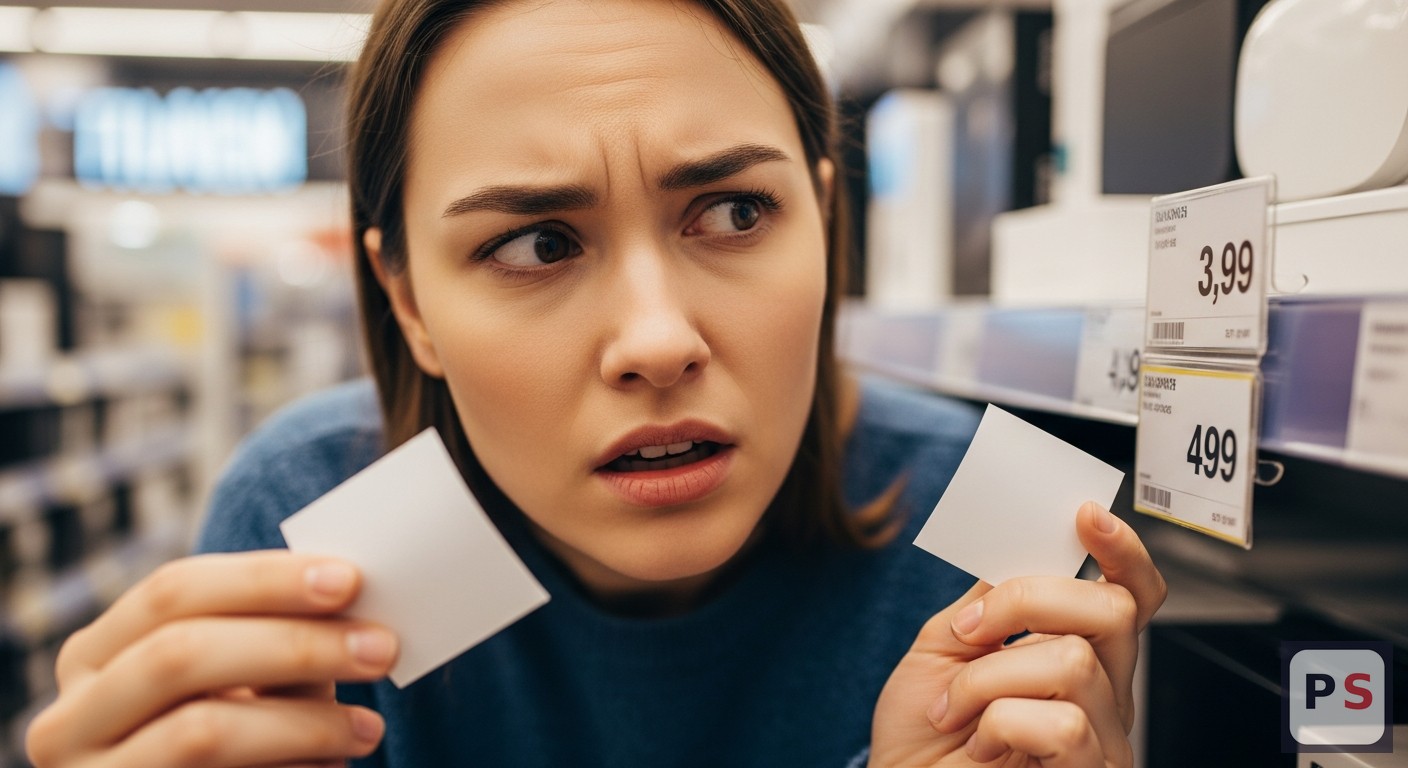
Here’s the core trick. A store lists a laptop at $899. Then they run a sale and show it as Was: $1,199 — Now: $899. Your brain immediately does the math. You just saved $300! You feel smart. You buy it.
But here’s what ConsumerAffairs actually found when they dug into the pricing data: in many cases, that $1,199 price existed for only a brief window — sometimes as little as a day or two — before the item was permanently repriced to $899. So the ‘original’ price was never the real price. It was a setup.
This is called reference price anchoring, and it’s been studied extensively in consumer psychology. The University of Chicago published research years ago showing that when you see a crossed-out higher price next to a sale price, you’re willing to pay 20-30% more than you would if you just saw the final price alone. Retailers know this. They count on it.
‘A price is only a deal if it was genuinely higher before — not if it was briefly labeled higher for the purpose of creating a discount.’ — ConsumerAffairs, June 2026
And the scarier thing? This isn’t a Best Buy-only problem. The ConsumerAffairs investigation explicitly noted that this is an industry-wide pattern. You’ll find it at electronics chains across Europe, Asia, and Latin America. The same trick, different logo on the door.
The Numbers Behind Best Buy Fake Deals That Genuinely Shocked Me
According to the ConsumerAffairs report, when analysts tracked 200+ electronics products at major chains over a 90-day period, more than 60% of items labeled as ‘on sale’ had never sold at the listed ‘original’ price for more than a few days in the prior three months. Sixty percent. That’s not a few bad apples — that’s the strategy.
And the markup isn’t subtle. On televisions, the gap between the artificial ‘reference price’ and the actual regular price was, on average, 22% higher than reality. On laptops it was closer to 18%. So when a TV appears to be 25% off, you might actually only be getting 3% off the real going rate.
| Product Category | Avg. Inflated ‘Reference Price’ | Actual Real Discount |
|---|---|---|
| Televisions | +22% above real price | ~3% genuine savings |
| Laptops | +18% above real price | ~7% genuine savings |
| Headphones | +31% above real price | ~2% genuine savings |
| Smartphones | +14% above real price | ~11% genuine savings |
Headphones are the wildest one here. A pair of Sony WH-1000XM5s marked as ‘31% off’ might only genuinely be 2% cheaper than the actual historical price. You’d never know unless you checked.
This Isn’t Just a First-World Problem — It’s Global

I want to be really clear about this because it’s easy to read ‘Best Buy’ and think this only matters if you live in North America. It doesn’t. The ConsumerAffairs report is specific to one chain, but the tactic it describes is documented by consumer protection agencies in the UK, the EU, South Korea, Brazil, and Australia.
In fact, the UK’s Competition and Markets Authority — their consumer watchdog — issued guidance back in 2024 specifically warning retailers against misleading reference pricing. The EU has similar rules under the Omnibus Directive, which requires that any shown ‘prior price’ must reflect the actual lowest price in the last 30 days. But enforcement is patchy, and digital storefronts operate in gray zones constantly.
The pattern is universal: big-box electronics stores run promotional events — think annual sale days, holiday weekends, mid-year clearances — and temporarily inflate reference prices in the weeks leading up to them. Then the ‘sale’ hits and the crossed-out number makes the deal look extraordinary. This is exactly what Consumer Reports also flagged in their June 2026 roundup of current tech deals, noting that shoppers need to verify price histories independently rather than trust the label.
- Vous confiez votre corps à des influenceurs santé — Pew Research vient de révéler à quel point cela peut être dangereux
- The ‘Micro-Habits’ Trend Is Quietly Rebuilding People’s Lives — And You Haven’t Even Started Yet
- Versicherer lehnen mehr Ansprüche als je zuvor stillschweigend ab – und die Zahlen dieser Woche beweisen es
How to Actually Protect Yourself — Right Now
Here’s the thing I didn’t know before reading all this: checking real price history takes about 45 seconds and is completely free. You don’t need any special knowledge.
For products sold online, browser extensions like Honey, CamelCamelCamel (for Amazon specifically), or Keepa show you a graph of exactly what price an item has sold for over the past 6-12 months. If you see a flat line at $349 and then a sudden spike to $499 just before the current ‘sale’ price of $349 — that’s the trick in action.
For in-store purchases, take out your phone, search the product model number on Google Shopping, and tap the price history option. Google has built this into Shopping results now and it’s remarkably revealing. I tried it on a random Bose speaker this week and the ‘sale’ price was — shockingly — the exact same price it had been for four months straight. No actual discount at all.
A few other moves worth knowing:
Wait the 90-day test. If you’re not in a rush, add the item to a price tracker wishlist and check back in 90 days. A real deal will show up as a genuine dip. A fake sale will just reset at the same price.
Check the manufacturer’s website directly. Brands like Samsung, Sony, and LG sell directly online, often at identical or lower prices — with better warranty terms included. Big-box stores sometimes charge a premium just for the convenience of the physical shelf.
Don’t let the crossed-out price close the sale. That number is doing almost all the psychological work. Train yourself to ignore it entirely and only look at the actual final price. Then decide if that price makes sense to you.
What Will You Do Next Time You Shop at a Big Electronics Store?
See what other PickSurely readers decided. Cast your vote — no going back!
The Bottom Line on Best Buy Fake Deals
Look, I don’t think Best Buy or any other electronics chain is purely evil. But the ConsumerAffairs piece this week was a useful reminder that retailers are not your shopping advisors. They’re businesses optimizing for their own margin. And one of the most effective tools they have is a number they wrote on a tag.
The crossed-out price exists for one reason: to make you feel like you’re winning. And most of the time — 60% of the time, according to the data — you’re not winning at all. You’re just buying at the regular price, slightly warmer inside.
Check the history. Give it 45 seconds. Your wallet will notice the difference over a year of shopping.
Last updated: June 13, 2026