
Key Takeaways
- Many retailers inflate prices 4–6 weeks before Black Friday so the ‘discount’ looks bigger than it really is.
- A BBC investigation this month tested real products and found some items were actually cheaper outside the sale window.
- Free price-tracking tools like CamelCamelCamel and Keepa show the full price history of any product — use them before buying.
- Anchor pricing and fake scarcity timers are deliberate psychological tactics, not accidents.
- January sales, mid-year clearances, and end-of-season events often beat Black Friday on genuine discounts.
I came across a BBC investigation published this week — Black Friday deals: How to make sure you’re getting good value — and honestly it confirmed something I’d suspected for years but never had the data to back up. Black Friday fake deals retailer tricks aren’t just a conspiracy theory from cynical shoppers. They’re a documented, systematic pricing strategy. And once you see the numbers, you can’t unsee them.
The BBC’s journalists tracked the prices of dozens of popular products — TVs, appliances, headphones — over months leading up to Black Friday. What they found was striking: many items had their prices quietly raised in the six weeks before the sale, so that when the “50% off” banner went up, the discount was measured against an inflated, artificially high starting point.
Not a sale. A performance.
How the Price Inflation Actually Works — and Why You Fall For It
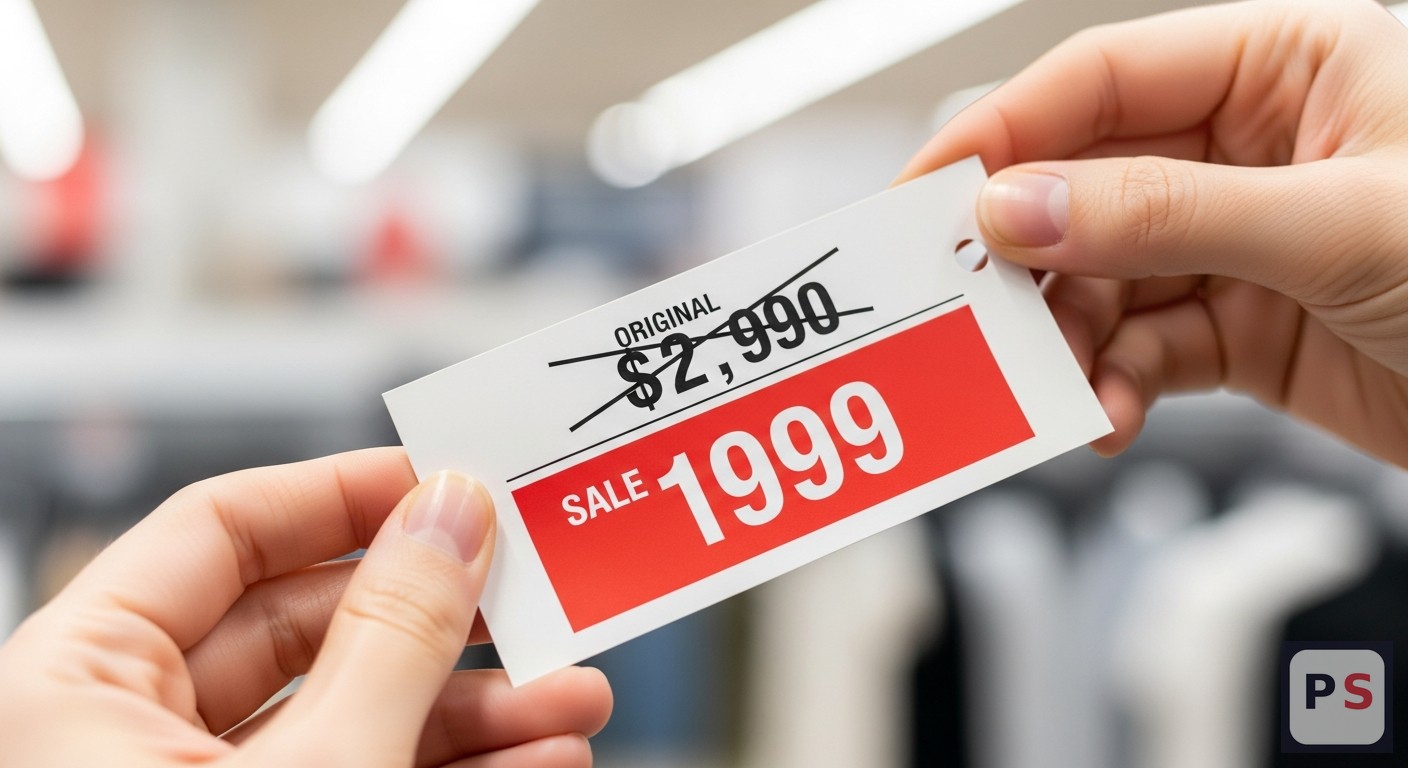
Here’s the basic mechanic. A TV that genuinely costs €400 gets its listed price bumped to €600 around mid-October. Then on Black Friday, it goes on “sale” for €420. You see a big red tag that says “30% off” — and technically, mathematically, that’s true. But you’re not saving €180. You’re saving €20, if that.
This is called anchor pricing. The inflated number is the “anchor” — it’s the reference point your brain uses to judge whether the sale price is good. Retailers have known about this psychological effect for decades. It’s not illegal in most countries as long as the higher price was genuinely charged at some point, even briefly.
Consumer Reports also flagged something similar in their recent roundup of current TV deals — noting that advertised discounts don’t always reflect what you’d actually pay during a non-sale period. The difference between the “was” price and the “is” price is often engineered, not organic.
“The problem isn’t that retailers offer sales. It’s that the original price — the one being discounted — is sometimes a fiction.” — BBC, June 2026
And then there are the countdown timers. “Only 2 left in stock!” You refresh the page an hour later. Still 2 left. These fake scarcity signals trigger loss aversion — the fear that you’ll miss out if you don’t act immediately. It works. Studies in behavioral economics consistently show that people make worse financial decisions when they feel rushed.
The Black Friday Fake Deals Retailer Tricks Nobody Talks About
It’s not just the price inflation. There are a few other tactics worth knowing.
Bundle confusion. Instead of selling a product at a lower price, retailers sometimes bundle it with accessories you didn’t want — a headphone case, an extra cable — and then call the whole package a deal. The core item didn’t get cheaper. You just got extras you’ll never use.
Then there’s model swapping. A retailer advertises a well-known TV brand at a jaw-dropping price. But look carefully — it’s a model made specifically for that sale, with slightly inferior specs (lower refresh rate, fewer HDMI ports) compared to the regular version. The model number is different. The name looks the same. Consumer Reports has written about this repeatedly.
| Tactic | How It Works | How to Spot It |
|---|---|---|
| Anchor Pricing | Original price inflated weeks before the sale | Use a price history tracker |
| Fake Scarcity | Low stock warnings that don’t change | Check the listing again in 2 hours |
| Model Swapping | Sale-specific models with worse specs | Google the exact model number |
| Bundle Confusion | Extras added instead of actual price cut | Price the item alone across stores |
| Countdown Timers | Artificial urgency to prevent comparison shopping | Ignore them. Always. |

The Free Tools That Expose the Truth in 30 Seconds
Here’s the good news. You don’t need to be an expert to outsmart this. Two free tools do most of the work for you.
CamelCamelCamel tracks the price history of products on Amazon — you paste a product URL and it shows you a graph of every price change going back years. If that “50% off” TV was €420 last March and is €420 today, you’re not getting a deal. You’re getting the normal price with extra fanfare.
Keepa does something similar with more detailed data. Both are free. Both work in minutes.
For products outside of Amazon — on brand websites, electronics chains, department stores — a quick search of the model number plus “price history” or “price tracker” often surfaces enough data. Google Shopping also lets you see whether prices have been shifting. It takes maybe five minutes per item.
I’m not entirely sure why more people don’t do this. My guess is that the sale-day energy — the red banners, the countdown, the feeling that everyone else is grabbing deals — makes careful research feel like it belongs to another, slower day.
- Como a IA para Orçamento e Economia Está Silenciosamente Drenando Sua Privacidade — O Que Você Precisa Saber Antes de Digitar Mais Uma Palavra
- How AI for Budgeting and Saving Is Quietly Draining Your Privacy — What You Must Know Before You Type Another Word
- O Dia do Prime da Amazon 2026 está chegando — Aqui estão as ofertas ocultas que a maioria dos compradores vai perder completamente
When Are the Actual Good Deals?
This might surprise you. The BBC piece and several Consumer Reports analyses suggest that mid-year sales, end-of-financial-year clearances, and post-holiday January events often produce deeper and more genuine discounts than Black Friday — simply because retailers are trying to clear real inventory rather than manufacturing excitement.
Electronics tend to drop after major product launches — when a new phone model releases, last year’s version often gets a real price cut. Appliances often see their best prices during spring renovation season. Fashion hits genuine lows at end-of-season, when the goal is to clear warehouses, not perform a spectacle.
None of this means Black Friday is worthless. Real deals do exist. But they’re rarer than the marketing suggests — and they go fast. The strategy that works: know exactly what you want before the sale starts, track the price for six weeks beforehand, and buy only if the sale price is genuinely lower than the historical average. Otherwise? Wait.
What Will You Do This Black Friday?
See how other readers are planning to shop. Vote once — results update live.