Key Takeaways
- Most standard home insurance policies worldwide do not cover flooding — it’s almost always a separate add-on or policy.
- A Global News report this week revealed widespread confusion at claims time, with homeowners assuming they were covered when they weren’t.
- The difference between a burst pipe (usually covered) and overland flooding (usually not) is the single most misunderstood gap in home insurance.
- The World Bank estimates over 60% of global flood losses are uninsured — and that figure is rising with climate change.
- You can close this gap cheaply — but you need to confirm it in writing with your insurer, not just over the phone.
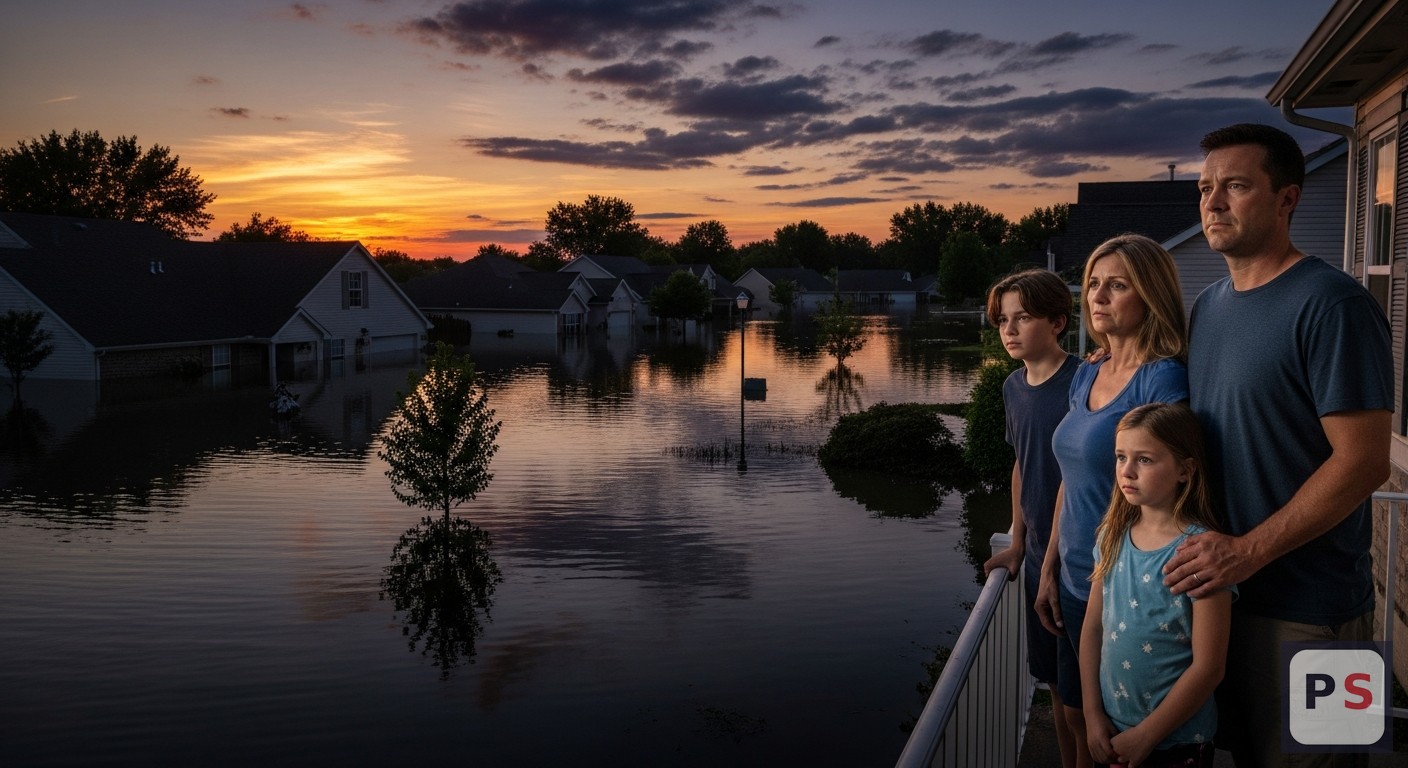
I stumbled onto a Global News report this week and genuinely had to read it twice. They were covering something that sounds almost too basic to be a real problem: millions of homeowners around the world don’t know that does your insurance cover flooding is not a rhetorical question — it’s one most people answer wrong. And they only discover the correct answer after a flood has already ruined their home.
This isn’t a niche story. Flooding is now the single most common and most costly natural disaster globally, according to the World Bank. And the insurance industry has quietly structured its products so that the most damaging thing that can happen to your home is also the thing most standard policies don’t cover. Let me break down how this actually works.
Why Standard Home Insurance Almost Never Covers Flooding
Here’s the thing that took me an embarrassingly long time to understand. When an insurance company writes a home policy, they’re thinking about risks they can predict and price accurately. A burst pipe, a kitchen fire, a break-in — these events happen at somewhat predictable rates across a portfolio of customers.
Flooding is different. It tends to hit entire regions at once, meaning the insurer potentially has to pay out thousands of claims simultaneously. That’s a catastrophic exposure. So the industry’s solution, over decades, was simple: exclude it from standard policies and make it a separate product.
The result? Most people buy home insurance, assume “flood” is in there somewhere, and never check the fine print. According to a Swiss Re report from 2025, the global protection gap for natural catastrophes — meaning the share of losses that insurance doesn’t cover — sits at around 62%. Flooding accounts for the largest portion of that gap.
“The gap between economic losses from flooding and insured losses continues to widen — not because fewer people own insurance, but because the policies they hold simply don’t respond to flood events.” — Swiss Re Institute, Natural Catastrophe Report 2025
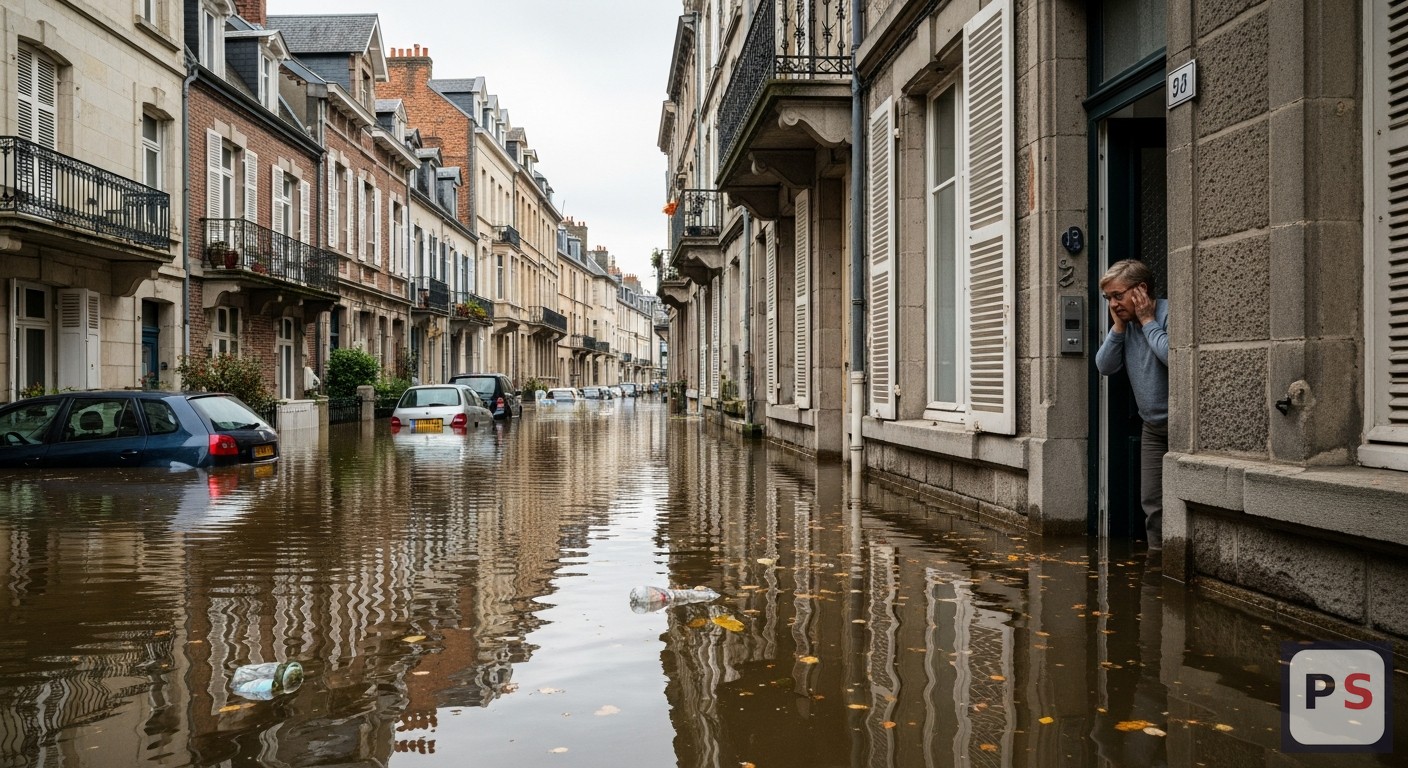
The terminology makes it even harder. Many policies cover “water damage” — but that typically means a sudden internal leak. It does not mean rain coming in, rivers overflowing, or surface water rising from the street. Those are classified as “overland flooding” or “surface water intrusion” and require specific endorsement or a completely separate policy.
The Germany 2021 Moment That Changed How Insurers Talk About This
In July 2021, the Ahr Valley in western Germany was devastated by flash flooding. Over 180 people died and property losses exceeded €33 billion. When the claims came in, something uncomfortable emerged: a huge portion of the affected homeowners had standard home insurance but no flood coverage — even in areas with a known flood risk history.
German media spent months reporting on the confusion. People genuinely believed they were covered. Insurers maintained they were technically correct to deny claims. Both sides were right in the worst possible way.
That event triggered a serious policy conversation across Europe — about whether flood coverage should be mandatory, opt-out rather than opt-in, or bundled into standard products by default. As of this week, that conversation is still ongoing. No universal solution exists yet.
And this isn’t just a European story. The same pattern played out in Australia during the 2022 Queensland floods, in Pakistan’s catastrophic 2022 monsoon season, and repeatedly across Southeast Asia. The Global News report from this week specifically noted Canadian homeowners facing the same confusion during recent spring flooding events.

Does Your Insurance Cover Flooding? Here’s Exactly How to Find Out
I know “read your policy” sounds obvious. But most policies are 40-60 pages of dense legal language — nobody actually reads them. So here’s a faster approach.
Search your policy document (usually a PDF) for these specific words: “flood”, “surface water”, “overland water”, “rising water”, “inundation”. If any of those appear in an exclusions section, you are almost certainly not covered for flooding.
Then do this — and this part is important. Call your insurer and ask: “Does my policy cover damage caused by flooding from external water sources?” Get the answer in writing. A text confirmation, an email, a written endorsement. Verbal assurances mean nothing if you ever need to make a claim.
If you’re not covered, ask about adding a flood rider or standalone flood policy. In most markets, this costs between €80–€300 per year depending on your location and property value. That’s genuinely cheap compared to the alternative. After Germany’s 2021 floods, the average claim among those who were covered was over €40,000.
- Você Deve Confiar na IA Com Suas Finanças? Aqui Está O Que Eles Não Estão Te Contando
- La demande d’apprentissage en ligne explose – Et les universités échouent discrètement les étudiants qui s’inscrivent
- Die Falle der ‘leisen Kündigung’ geschieht bereits an deinem Arbeitsplatz – und die meisten Menschen erkennen die Anzeichen viel zu spät
The New Embedded Insurance Push — And Why It Might Actually Help
There’s a genuinely interesting shift happening in the industry right now. Insurance Edge this week published a piece on what’s called “embedded insurance” — where coverage is automatically bundled into another product or transaction, rather than sold separately.
Think: a mortgage that automatically includes flood coverage, finalized at the point of sale. Or a property listing platform that offers flood add-ons during the purchase process. The idea is that people fail to buy coverage not because they don’t want it, but because the separate purchase process creates friction and people forget — or assume they’re already covered.
Several insurtech startups in the UK, Germany, and Singapore are already piloting this model. It’s not widespread yet. But it’s one of the more promising structural fixes to the coverage gap problem, because it removes the assumption problem entirely.
Flood Coverage Gap Calculator
Answer a few quick questions to see if your home is likely underprotected against flooding.
What You Should Actually Do This Week
Honestly, this is one of those articles where the action item is simple but genuinely urgent. Not in a dramatic way — just in the “don’t be the person who finds out during a disaster” way.
Check your policy wording for flood exclusions. Call or email your insurer to confirm. If you’re not covered, get a quote for a flood rider — it’s usually cheaper than you think. And if you live near water, a coastline, or in a historically flood-prone area, treat this as genuinely high priority rather than something to handle “at renewal.”
The Global News report that triggered this piece ended with a quote from a claims consultant that stuck with me: “The most expensive insurance mistake isn’t buying the wrong policy — it’s buying a policy and assuming it covers what you haven’t actually checked.” That’s it. That’s the whole thing.
Last updated: June 23, 2026