
Key Takeaways
- Certain home renovations — solar panels, heat pumps, medical modifications — qualify for significant tax deductions or credits in most countries
- General cosmetic upgrades like new kitchens and bathrooms almost never qualify — the distinction matters enormously
- A recent House Beautiful investigation found that thousands of homeowners are leaving real money unclaimed every year by not asking the right questions
- The renovation type, timing, and how you document it all affect whether you see any savings at all
- Use the calculator below to estimate your potential savings before you sign any contractor agreement
I came across a House Beautiful investigation this week — the headline said “Experts Say These Tax-Deductible Home Improvements Can Help You Get Back Thousands.” And honestly, I almost scrolled past it. But something made me click. And then I spent the next two hours going down a rabbit hole I did not expect.
Here’s what shocked me: the experts they interviewed weren’t talking about some niche loophole. They were talking about tax-deductible home improvements savings that are right there in plain sight — documented by tax authorities in country after country — and yet the average homeowner has no idea they exist.
So I broke it down. And I think you’ll want to know this before your next renovation project.
Why Tax-Deductible Home Improvements Savings Exist in the First Place
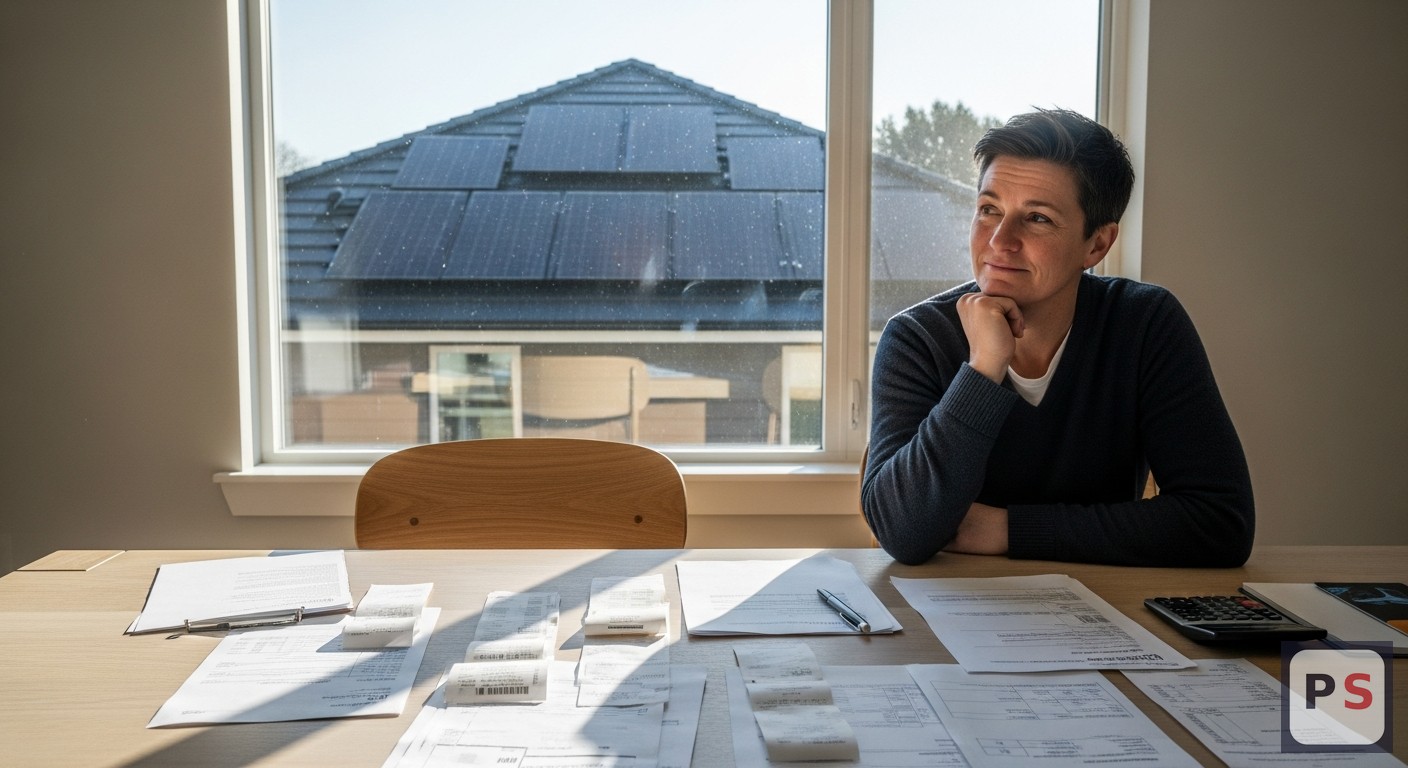
Governments around the world have a problem. Energy demand is rising. Buildings — homes specifically — account for roughly 30% of global energy consumption, according to the International Energy Agency. That’s not a small number.
So what do governments do? They incentivize homeowners to upgrade. A tax credit or deduction on a heat pump installation costs the government far less than building a new power plant. It’s actually a pretty smart trade — they give you a piece of your tax bill back, and in return, you reduce the national energy load.
The World Bank has documented this approach across dozens of economies. What they call “fiscal instruments for green buildings” have been rolled out in Europe, parts of Asia, Latin America, and North America. The specific percentages vary — but the principle is nearly universal: upgrade your home’s energy performance, pay less tax.
The problem? Your contractor doesn’t mention it. Your real estate agent doesn’t mention it. And if you don’t go looking, you’ll never find it.
What Actually Qualifies for Tax-Deductible Home Improvements Savings
This is where it gets specific. And the difference between what qualifies and what doesn’t is genuinely surprising.
Solar panel installations are the clearest example globally. In many countries, you can recover 20% to 30% of the installation cost directly as a tax credit — not a deduction, but a credit, which means it comes directly off what you owe in tax. On a €15,000 solar installation, that’s potentially €3,000 to €4,500 back. That’s real.
Heat pumps and energy-efficient HVAC systems are close behind. The European Union’s REPowerEU plan, launched after the 2022 energy crisis, pushed member states to offer subsidies and tax benefits for heat pump adoption. Several countries — Germany, France, the Netherlands — responded with schemes that can cover 20% to 35% of costs. Similar programs exist in Canada, Japan, and Australia.
Energy-efficient windows and insulation often qualify for partial credits. Not as generous, typically in the 15%–25% range of eligible costs. But if you’re replacing 12 windows at €800 each, even 20% back matters.
And here’s one that most people genuinely don’t know about: medical necessity modifications. If someone in your household has a disability or mobility issue that requires structural home changes — think ramps, stair lifts, widened doorways, grab bars — these can often be claimed as medical expenses. They’re not “home improvements” in the tax authority’s eyes. They’re healthcare costs.

What Definitely Does Not Qualify (This Part Stings)
General cosmetic renovations. Kitchen remodels. Bathroom upgrades. New flooring. A nicer deck. Landscaping. A fresh coat of paint.
None of it. In almost every jurisdiction worldwide.
I know. That hurts to read if you just spent €20,000 on a new kitchen. But this is exactly the kind of thing the House Beautiful story was pointing at — people spend enormous amounts on renovations that feel like upgrades but have zero tax benefit, while overlooking the renovations that would have returned real money.
The one exception worth noting: if the property is used as a rental or commercial space, renovation costs can often be written off as a business expense. That’s a different mechanism entirely — not a credit, but a deduction against rental income. And the rules differ significantly by country, so this one genuinely requires local professional advice.
- La regla presupuestaria viral 70-20-10 está en todas partes ahora mismo — pero nadie menciona la parte que realmente falla
- Der Trend der ‘Mikro-Habits’ verändert leise die Gehirne der Menschen – und du machst es immer noch auf die harte Art
- Os Diplomas Online Valem a Pena em 2026 — Mas Apenas Se Você Evitar Estas 4 Armadilhas Silenciosas
The Timing and Documentation Problem Nobody Talks About
Even if you do the right renovation, you can still miss out. Here’s why.
Most tax credit systems require you to claim the benefit in the same tax year you paid for the work. Miss the filing window? In many countries, you either lose it or face a complicated amended-return process. And some credits have annual caps — meaning if your solar install was €18,000 but the cap is €10,000, only the capped amount qualifies.
Documentation matters enormously. Tax authorities typically want itemized contractor invoices showing what was installed, the energy rating of the equipment (for heat pump or window credits), and proof of payment. A generic invoice that just says “home renovation — €12,000” won’t cut it.
“The single most common reason energy tax credits go unclaimed is not ineligibility — it’s missing paperwork. Homeowners simply don’t ask their contractors for the right documentation at the time of installation.” — home finance expert quoted in House Beautiful, June 2026
So before any contractor starts work on an eligible renovation, ask them specifically: Can you provide documentation that shows the energy rating and product specifications for my tax claim? Most good contractors will know exactly what you mean. If they don’t — that’s a red flag about their experience level.
How to Think About This Before Your Next Renovation
The framing shift that House Beautiful’s piece pushed — and that I think is genuinely useful — is this: think about tax benefits as part of the renovation budget conversation, not as an afterthought.
If you’re deciding between a cosmetic kitchen upgrade and a solar-plus-heat-pump package, the real cost comparison isn’t what you pay the contractor. It’s what you pay after any credits. A €14,000 heat pump system with a 25% credit costs you effectively €10,500. Suddenly the comparison looks very different.
| Renovation Type | Typical Credit/Deduction | Qualifies Globally? |
|---|---|---|
| Solar panel installation | 20%–30% credit | Very commonly, yes |
| Heat pump / HVAC upgrade | 20%–35% credit | Yes, especially EU, Canada, AU |
| Energy-efficient windows | 15%–25% credit | Partially, varies by country |
| Medical necessity modifications | Full deduction as medical expense | Often yes, primary home only |
| Kitchen / bathroom remodel | None | Generally no |
| General cosmetic upgrades | None | No |
I’m not a tax professional — and I want to be clear about that. This is me breaking down what I found in this week’s reporting and cross-referencing it with IEA, World Bank, and EU policy documentation. The specifics in your country may differ.
But the broader point stands: most homeowners are planning renovations without factoring in the tax picture at all. And the people who do factor it in are walking away with thousands more in their pockets.
Run your numbers below — then bring those estimates to a conversation with your accountant before you sign anything.
🏠 Home Renovation Tax Savings Estimator
Estimate how much you could potentially recover through tax deductions or energy credits on your renovation project.
Your Estimated Results
Last updated: June 01, 2026