
Key Takeaways
- Tax-deductible home improvements savings are available to homeowners in most countries — but the majority never claim them
- Energy-efficient upgrades like solar panels, heat pumps, and insulation are among the most widely qualifying improvements globally
- There’s a critical difference between a ‘repair’ and an ‘improvement’ — and only one of them generally qualifies for deductions
- Keeping itemized invoices, permits, and photos isn’t optional — it’s what separates a valid claim from a rejected one
- Home improvements can also reduce capital gains tax when you eventually sell — a benefit most homeowners never think about
I stumbled onto a House Beautiful piece earlier this week with a headline that honestly made me do a double-take. It said tax-deductible home improvements savings could get homeowners back thousands of dollars or euros — and that most people have absolutely no idea this exists. I thought, okay, that sounds like a headline designed to get clicks. But then I actually read it. And then I read three more sources. And now I’m sitting here genuinely annoyed that nobody told me this sooner.
So here’s what I found out, broken down so it actually makes sense.
Why Tax-Deductible Home Improvements Savings Exist In The First Place

Governments around the world — from France and Germany to Japan and Brazil — have been quietly rolling out incentive programs over the past decade to push homeowners toward energy-efficient upgrades. The logic is simple: if your home uses less energy, the national grid benefits, carbon emissions drop, and the government spends less on energy subsidies. So they give you a tax break as a reward for spending your own money on improvements.
In the European Union, the Renovation Wave strategy — which aims to at least double the annual energy renovation rate of buildings by 2030 — directly supports these kinds of tax incentives. In many EU countries, you can claim back 15% to 30% of the cost of energy upgrades. Japan’s eco-point system gives homeowners points redeemable for goods and gift certificates when they install qualifying energy-efficient windows or insulation. And in Canada, the Greener Homes Grant offers up to CAD $5,600 in federal grants for qualifying retrofits.
These aren’t obscure niche programs. They’re mainstream government policies. The problem is the average homeowner only finds out about them after the renovation is done and it’s too late to claim anything properly.
"Most homeowners leave significant money unclaimed every year simply because they didn’t know to ask their tax advisor before starting renovations — not after." — House Beautiful, May 2026
The Critical Difference Between a Repair and an Improvement
This tripped me up at first. Here’s the thing — not all home spending qualifies. Tax authorities almost universally draw a line between a repair and an improvement, and they treat them very differently.
A repair is something that maintains your home’s existing condition. Fixing a leaky pipe, repainting a wall, replacing a broken window pane — these keep things as they were. An improvement, by contrast, adds value, extends the useful life, or adapts the property to a new use. Replacing all your single-glazed windows with triple-glazed energy-efficient ones? That’s an improvement. And that distinction matters enormously for what you can claim.
| Type of Work | Example | Usually Qualifies? |
|---|---|---|
| Repair | Fixing a cracked tile | ❌ No |
| Energy improvement | Installing solar panels | ✅ Yes |
| Structural upgrade | New insulation in attic | ✅ Yes (most countries) |
| Cosmetic update | New kitchen cabinets | ⚠️ Depends |
| Home office build-out | Dedicated work room | ✅ Yes (with conditions) |
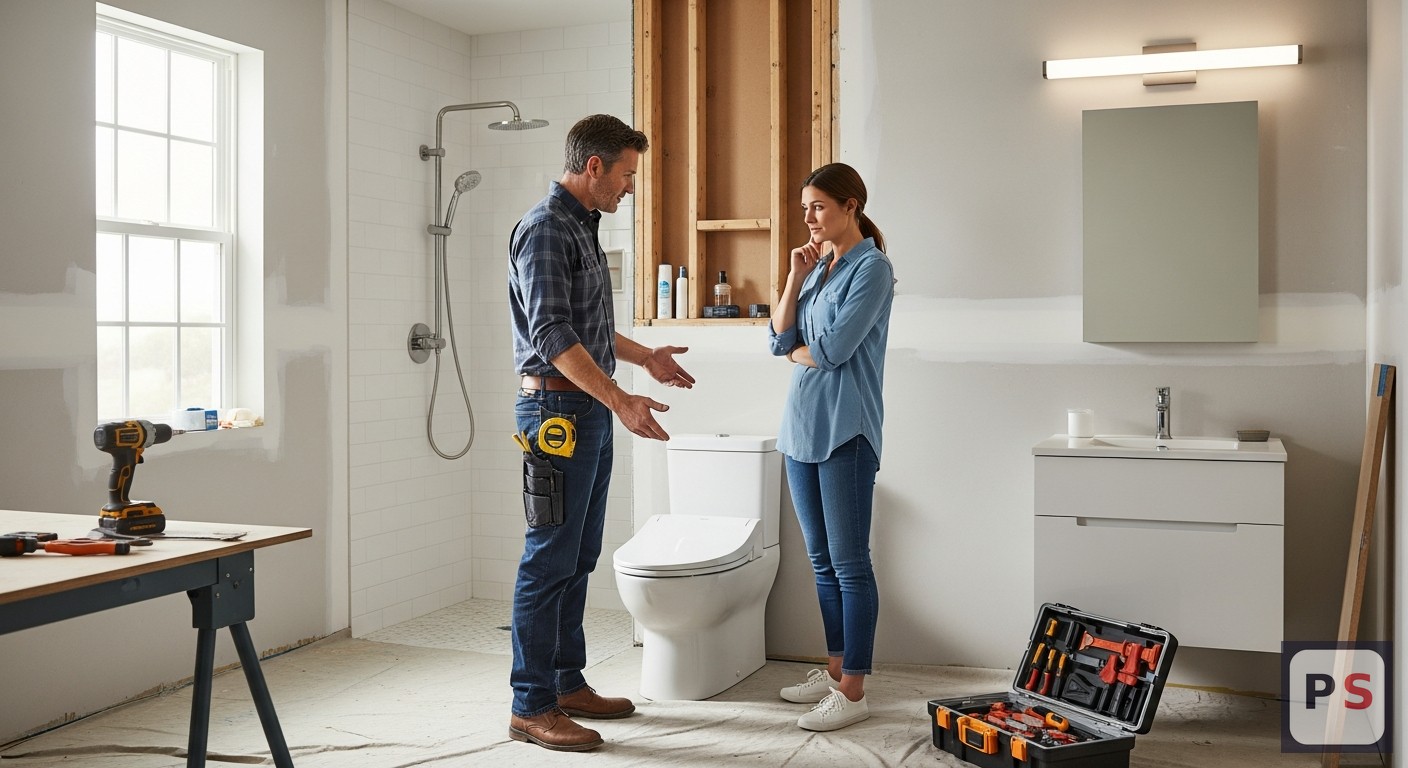
The Upgrades That Qualify Most Commonly For Tax-Deductible Home Improvements Savings
Based on multiple government program overviews I went through this week, these categories show up again and again across different countries as qualifying improvements:
Solar panels and renewable energy systems — almost universally supported with some form of rebate, grant, or tax deduction. Installation costs in the €8,000–€15,000 range are common, and deductions or grants can cover 20–30% of that. That’s potentially €3,000–€4,500 back.
Heat pumps and HVAC upgrades — particularly relevant right now as natural gas prices remain volatile globally. The International Energy Agency noted in their 2025 report that heat pump sales surged 15% year-on-year across Europe. Many governments are actively subsidizing the switch with generous tax write-offs.
Insulation and air sealing — boring but brilliant. Attic insulation, wall insulation, floor insulation — these consistently qualify under energy efficiency schemes and deliver some of the best return on investment of any home upgrade.
Energy-efficient windows and doors — replacing single-glazed windows with double or triple-glazed units is one of the easiest wins. It improves home value, cuts heating bills, and typically qualifies for deductions in the EU, UK, and Canada.
Home office renovations — this one has grown massively post-pandemic. If you have a dedicated, exclusively-used work space in your home, many countries allow you to deduct a portion of renovation costs tied to that room. The ‘exclusive use’ rule is strict though — one piece of gym equipment in the corner and your claim could be rejected.
The Part Nobody Talks About — Capital Gains Tax
Here’s where it gets genuinely interesting. Even if your country doesn’t offer a direct deduction on renovation costs, home improvements can still reduce your tax bill — just differently, and years later.
When you sell your home, you may owe tax on the profit — the difference between what you paid and what you sold it for. In many countries this is called capital gains tax. But here’s the thing: documented improvements add to your home’s cost basis. That’s basically the official starting price used to calculate your profit. If you bought a home for €200,000 and spent €40,000 on documented qualifying improvements, your cost basis becomes €240,000. Sell for €350,000 and your taxable gain is €110,000 instead of €150,000. On a 20% capital gains tax rate, that’s €8,000 in savings — from paperwork you should have been keeping anyway.
This is why the documentation piece is so important. Every receipt. Every contractor invoice — and it has to be itemized, not just a total. Every permit application. Every before-and-after photo. Not because the taxman is out to get you, but because without it, you literally can’t prove the improvement happened.
🏠 Home Renovation Tax Savings Estimator
Enter your renovation costs below and see your estimated tax savings potential.
What To Actually Do Before Your Next Renovation
I'm not a tax advisor — and honestly this article shouldn't replace one. But here's the practical checklist that came out of everything I read this week:
First, check your country's specific energy efficiency incentive programs before you start. Not after. The EU's EPBD (Energy Performance of Buildings Directive) is a good starting point for European readers. For others, search '[your country] energy efficiency home grant 2026' — most governments have official program pages.
Second, get itemized quotes from contractors. Line by line, not a single lump sum. This serves double duty — it protects you from being overcharged and creates the paper trail you need for any tax claim.
Third, tell your tax advisor about planned renovations at the start of the year, not at filing time. Many deductions require pre-approval or specific documentation collected during the work, not retrospectively.
And fourth — use the calculator above as a rough sense-check. It won't give you a legally accurate number, but it'll show you whether it's worth booking that call with a professional. For most homeowners doing any energy upgrade above €5,000, it absolutely is.
The House Beautiful piece from this week put it well: the money isn't hidden exactly. It's just sitting unclaimed, year after year, by people who were never told to look for it. Now you know to look.
Last updated: May 15, 2026