
Key Takeaways
- A major new study — reported by the Wall Street Journal this week — found that people who eat the most ultraprocessed foods have up to 28% higher risk of developing dementia compared to those who eat the least.
- Ultraprocessed foods aren’t just junk food — they include packaged breads, flavored yogurts, instant noodles, breakfast cereals, and diet sodas.
- The damage appears to come from industrial additives, emulsifiers, and artificial flavorings — not just sugar or fat alone.
- The gut-brain connection plays a big role: ultraprocessed foods disrupt gut bacteria, which directly affects brain inflammation.
- You don’t need to overhaul your entire diet. Research suggests even replacing one ultraprocessed meal a day with a whole food equivalent can meaningfully reduce risk over time.
I saw the Wall Street Journal headline yesterday — ‘Adding to the List of Dementia Risks: a Diet High in Ultraprocessed Foods’ — and I genuinely stopped scrolling. Because I’d just eaten a bowl of packaged cereal for breakfast and was halfway through a bag of crackers at my desk. And I had no idea ultraprocessed foods and dementia risk were this directly connected.
So I spent the last few hours reading the underlying research. Here’s what I found — and why I think most people have no idea how serious this actually is.
What the New Research on Ultraprocessed Foods and Dementia Risk Actually Says
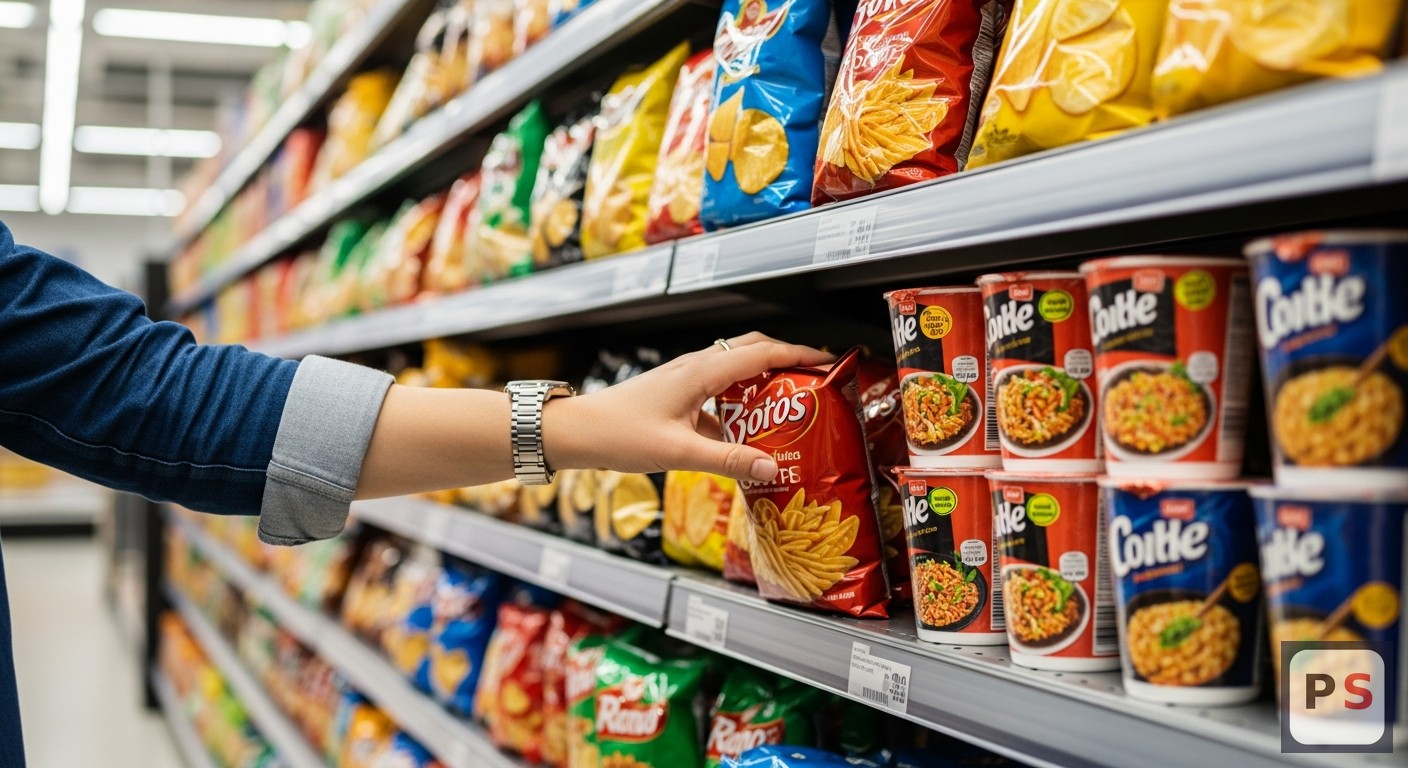
The study that’s been making headlines this week builds on a growing body of research linking ultraprocessed food consumption to cognitive decline. The most cited large-scale data — referenced across multiple analyses — comes from a cohort of over 72,000 people tracked across more than a decade in the UK Biobank study. The finding: people in the highest quartile of ultraprocessed food consumption showed a 28% higher risk of developing dementia, including Alzheimer’s disease, compared to those who ate the least.
Twenty-eight percent. That number shocked me. This isn’t a small, obscure study. 72,000 people over ten years is a massive sample — and the link held up even after controlling for other lifestyle factors like smoking, physical activity, and overall calorie intake.
What makes this different from older food-and-health studies is the specificity. It’s not fat. It’s not sugar alone. Researchers are pointing the finger at something more nuanced: the industrial processing itself — the emulsifiers, artificial colorings, modified starches, and flavor enhancers added to make food shelf-stable, hyper-palatable, and cheap to produce.
‘The issue isn’t one ingredient — it’s the combination of additives that the human gut and brain have never encountered in this concentration before.’
— Nutritional epidemiology researchers commenting on the UK Biobank data
What Counts as ‘Ultraprocessed’ — This Part Surprised Me
Here’s where it gets uncomfortable. Because the definition of ‘ultraprocessed’ is much wider than most people realize. Researchers use a framework called the NOVA classification system — developed by researchers at the University of São Paulo — which groups foods into four categories based on how much industrial processing they’ve undergone.
NOVA Group 4 — the ultraprocessed category — includes things you’d expect, like chips, fast food burgers, and fizzy sweets. But it also includes things you’d probably consider ‘fine’: packaged sliced bread, flavored yogurt, breakfast cereals, instant noodles, plant-based meat substitutes, diet sodas, and most protein bars.
| NOVA Group | Description | Examples |
|---|---|---|
| Group 1 | Unprocessed or minimally processed | Fresh fruit, eggs, plain meat, oats |
| Group 2 | Processed culinary ingredients | Butter, olive oil, flour, salt |
| Group 3 | Processed foods | Canned beans, aged cheese, cured meats |
| Group 4 | Ultraprocessed ← the problem | Packaged cereals, instant noodles, diet soda, chips, most fast food |
The rule of thumb researchers use: if it has more than five ingredients and includes anything you wouldn’t find in a home kitchen — like ‘carboxymethylcellulose’, ‘sodium stearoyl lactylate’, or ‘acesulfame K’ — it’s almost certainly Group 4.
The Gut-Brain Connection Nobody Talks About Enough
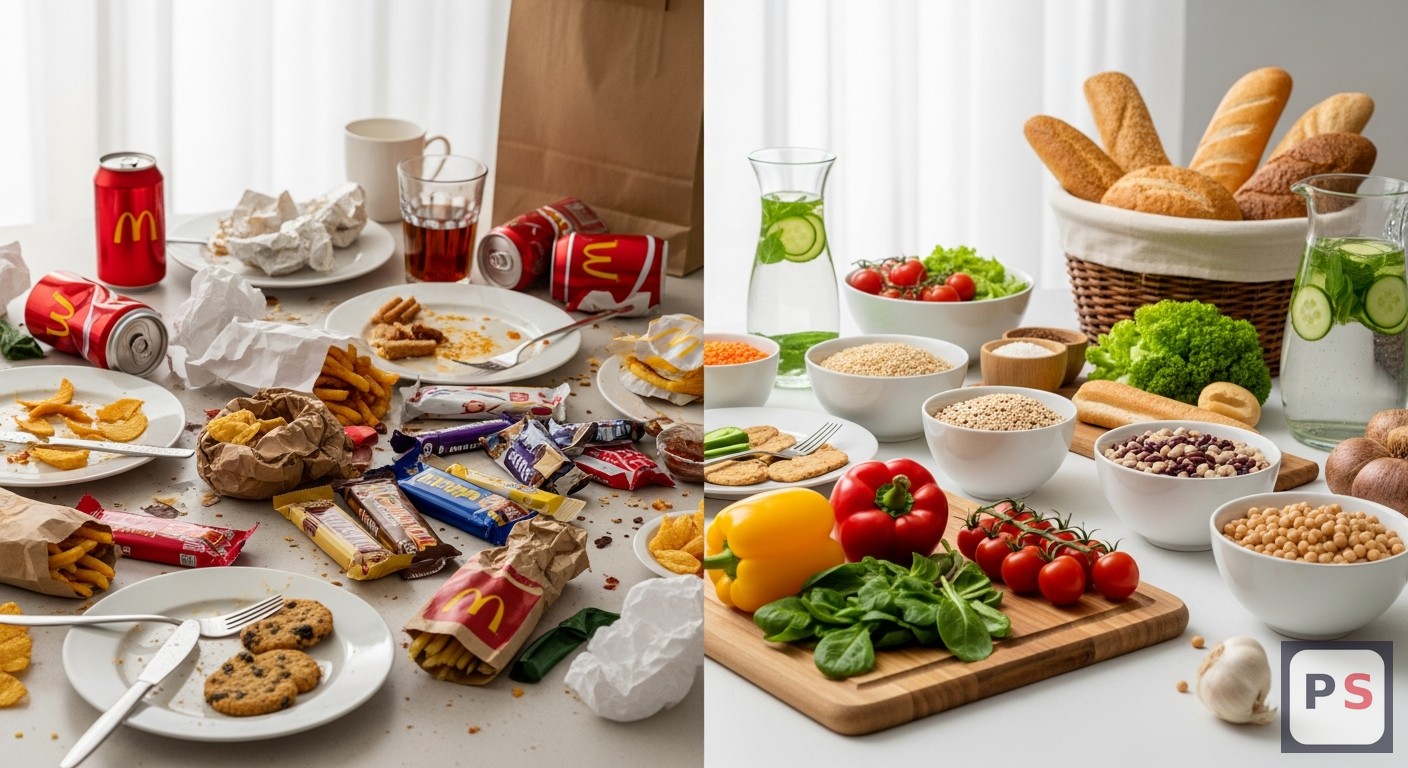
This is the mechanism that makes the dementia link make biological sense — and it’s something I had no idea about until I dug into this.
The gut and the brain are connected through something called the gut-brain axis — basically a two-way communication highway involving the vagus nerve and various signaling molecules. Your gut bacteria — collectively called the microbiome — produce neurotransmitters, regulate inflammation, and directly influence how your brain functions day to day.
Ultraprocessed foods, particularly those with emulsifiers like polysorbate-80 or carrageenan, have been shown in multiple studies to damage the gut lining and disrupt the balance of gut bacteria. This triggers chronic low-grade inflammation — and that inflammation, over years and decades, appears to contribute to the neurodegenerative processes behind dementia.
This might also explain why people who eat a lot of ultraprocessed foods often report brain fog, poor concentration, and low mood — even when they’re not clinically ill. The damage can be happening long before any diagnosis.
- Windgetriebener Regen ist nicht durch Ihre Wohngebäudeversicherung gedeckt – und Ihre Versicherungsgesellschaft wird es Ihnen nicht sagen
- El test de ajuste laboral de Bill Gurley se está volviendo viral — y la mayoría de las personas están fallando sin saberlo
- 14 Mundane Habits That Stealthily Transform Your Life — And You Might Be Overlooking Every Single One
How Much Is Too Much — The Actual Numbers
According to data from the Global Dietary Database and analyses published in The Lancet, ultraprocessed foods now make up:
- More than 50% of daily calorie intake in the UK and Australia
- Around 58% of daily calories in the United States and Canada
- Rapidly rising rates across Brazil, Mexico, and Southeast Asia as Western food chains expand
- An estimated 40–45% of calorie intake in urban China and India
This isn’t a niche problem for a specific country. This is a global dietary shift that happened in roughly one generation. And the brain disease data — with global dementia cases projected to reach 153 million by 2050 according to the World Health Organization — is running in parallel with it.
🧠 How Risky Is Your Diet for Your Brain?
Answer 5 quick questions to see where you stand — based on the latest dementia-diet research.
What Ultraprocessed Foods and Dementia Risk Means for Your Daily Choices
I want to be honest here — I'm not a doctor and I'm not going to tell you to throw out everything in your pantry tonight. That's not realistic and it's not what the research even suggests.
What the evidence does point to is a concept researchers call 'food substitution' — the idea that the most measurable health benefit comes not from perfection, but from replacing specific ultraprocessed items with minimally processed alternatives. One large-scale modelling study found that replacing just 10% of ultraprocessed food intake with whole foods was associated with significant reductions in cardiovascular and cognitive disease risk over time.
Practically, that might look like this: swap the packaged breakfast cereal for rolled oats. Replace the flavored yogurt with plain yogurt and fresh fruit. Choose an apple over the afternoon cracker packet. None of these swaps require money, cooking skill, or a lifestyle overhaul.
And honestly — after reading all of this — I checked my own ingredient labels for the first time in years. My go-to 'healthy' granola bar had 11 ingredients, including two emulsifiers. I didn't even know that was something I should look at.
That's the thing about ultraprocessed foods and dementia risk: the threat is invisible until you start looking. And now that you know what to look for, you can't exactly un-know it.
Last updated: June 06, 2026