
Key Takeaways
- Wind-driven rain — water pushed inside your home by wind through gaps or openings — is excluded from most standard home insurance policies worldwide.
- A new push by StormArmour this week is calling for mandatory consumer disclosure around this hidden exclusion, but no rule exists yet.
- Your window or door manufacturer warranty likely excludes this too, meaning you have zero recourse from two directions at once.
- You can plug this gap with a windstorm rider or wind endorsement — but you have to ask for it explicitly. Insurers won’t volunteer it.
- Use the calculator below to estimate how exposed your home actually is before the next storm season hits.
I came across a press release this week that honestly stopped me cold. StormArmour — a company specializing in wind-driven water protection — just made a public call for greater consumer disclosure around wind-driven rain losses that are excluded by both insurance policies and manufacturer warranties. And I thought: wait, most people don’t even know this exclusion exists. So here we are.
Let me explain what wind-driven rain actually is, because the term sounds technical but the situation is brutally simple. During a storm, wind forces water through tiny gaps around window frames, under doors, through roof vents — any opening that isn’t perfectly sealed. That water soaks your walls, ruins your floors, destroys your furniture. And in most standard home insurance policies globally, that specific damage is not covered.
Why Wind-Driven Rain Not Covered by Insurance Is Such a Hidden Problem
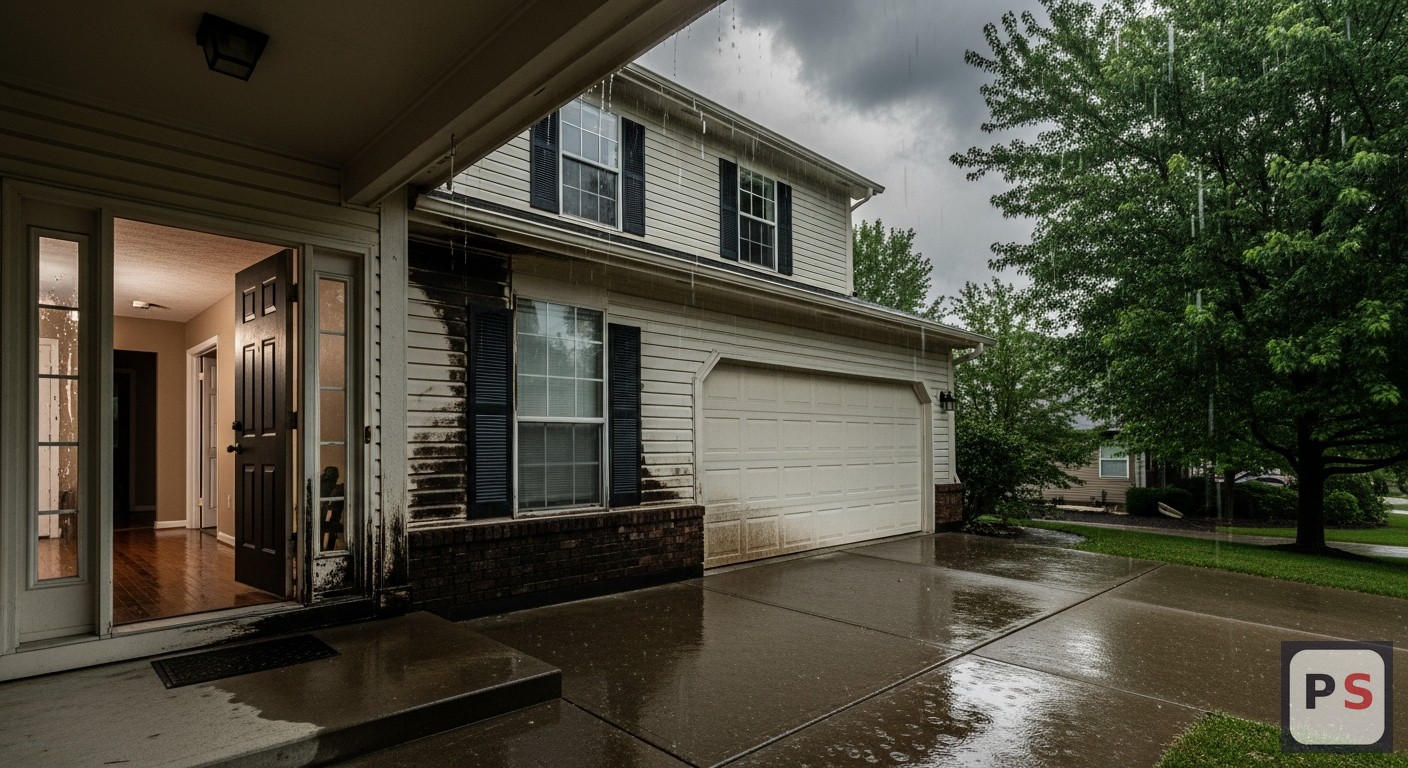
Here’s the thing that gets me. Most people believe their home insurance covers storm damage. And in a broad sense, it does — a tree falls through your roof, you’re covered. A hurricane peels off your siding, you’re likely covered. But the moment water enters through an existing opening — even one that the wind forced open or pushed water through — insurers categorize it differently.
This is sometimes called the wind-opened opening exclusion. Insurers argue that if a window seal was compromised, or if the wind pushed rain through a gap in your caulking, that’s a maintenance issue — not a weather event. It sounds absurd. But it’s written right there in your policy, usually somewhere around page 40–60 of the full document nobody reads.
According to the Insurance Journal report on StormArmour’s disclosure push, this affects homeowners across storm-prone regions worldwide — from coastal Europe to South and Southeast Asia to the Caribbean and Latin America. This isn’t a niche American problem. Any region with seasonal storms is exposed.
Most homeowners only discover this exclusion after they file a claim — which is exactly the wrong time to find out. — StormArmour disclosure statement, June 2026
That quote says it all, honestly. Insurance is one of those things where ignorance is genuinely expensive.
The Double Exclusion You Probably Don’t Know About
This is the part that shocked me most when I dug into the StormArmour report. It’s not just your insurer leaving you exposed — your window and door manufacturer warranty typically excludes wind-driven rain infiltration too.
Manufacturers argue that their products are designed to resist water up to a certain pressure rating — and if a storm exceeds that, it’s an act of nature, not a product defect. So you can’t go back to the manufacturer either. You’re caught between two massive exclusions at exactly the moment a storm has just wrecked your interior.
To understand how common this is, look at the numbers. A 2024 World Bank climate risk report estimated that over 600 million homes in coastal and subtropical zones face elevated wind-water infiltration risk. That’s a staggering number of households carrying a coverage gap they almost certainly don’t know about.

Let’s make it concrete. Say a Category 1 tropical storm passes through your city. Wind pushes water through aging seals around your bedroom windows. Your bedroom wall, subfloor, and closet contents are damaged — repair estimates come in at around 12,000 to 18,000 in local currency equivalent. You file a claim. Your insurer points to the exclusion clause. Your window manufacturer says the seals performed within spec. You’re on your own.
This scenario plays out tens of thousands of times every storm season. And almost none of those homeowners expected it.
What the StormArmour Disclosure Push Actually Means Right Now
I want to be honest here — I’m not entirely sure how much weight this particular industry call for change will carry. StormArmour is pushing for mandatory upfront disclosure at point-of-sale for both insurance policies and building product warranties. The idea is that consumers should be told clearly, in plain language, before they sign anything, that wind-driven rain infiltration is excluded.
That’s a completely reasonable ask. But as of today — June 2026 — there’s no regulation requiring it in most countries. This is still a voluntary disclosure world when it comes to this specific exclusion.
What that means practically: you can’t wait for the law to protect you here. You have to go look for this yourself.
| Damage Type | Typically Covered | Wind-Driven Rain Covered |
|---|---|---|
| Tree falls on roof | ✅ Usually yes | — |
| Water through roof hole | ✅ Usually yes | — |
| Water through window seals | ⚠️ Often excluded | ❌ Excluded |
| Water through door gaps | ⚠️ Often excluded | ❌ Excluded |
| Flood from rising ground water | ❌ Separate flood policy | — |
- Les améliorations à domicile déductibles d’impôts sont une mine d’or cachée — et la plupart des propriétaires ne réalisent même pas qu’ils passent à côté
- Ihr Gesundheitsinfluencer hat wahrscheinlich keinen medizinischen Abschluss – das hat Pew Research gerade herausgefunden
- La regla presupuestaria viral 70-20-10 está en todas partes ahora mismo — pero nadie menciona la parte que realmente falla
Three Steps to Fix Your Wind-Driven Rain Coverage Gap Today
Alright, enough doom. Here’s what you can actually do — and none of this requires a lawyer or a financial advisor.
Step one: Find the clause in your current policy. Search your PDF for the words wind-driven rain, wind-opened opening, or water infiltration. If it’s excluded, you’ll find it. If you can’t locate your policy documents, email your insurer and ask them to confirm in writing whether wind-driven rain infiltration is covered or excluded. That paper trail matters later.
Step two: Ask about a windstorm rider or wind endorsement. This is an add-on to your existing policy. It specifically covers water damage caused by wind-driven rain. In many markets this costs between 100 and 300 per year depending on your home’s location and age. That’s genuinely cheap compared to a five-figure repair bill. Not every insurer offers it — if yours doesn’t, this might be a reason to shop around.
Step three: Check your windows and doors physically. This might sound too simple, but old caulking, worn weatherstripping, and deteriorated frame seals are the most common entry points for wind-driven water. Replacing those seals yourself costs almost nothing. And if you’re in a high-risk zone, consider installing rated storm shutters or impact-resistant glazing — both of which can actually lower your insurance premium in some markets.
🏠 Wind-Driven Rain Coverage Gap Calculator
Find out how exposed your home might be — and roughly how much you could lose uncovered.
Your Estimated Coverage Gap
Why This Wind-Driven Rain Insurance Gap Won’t Fix Itself
The reason StormArmour had to make a public push for disclosure — rather than this simply being standard practice — tells you everything. Insurance products are complex documents designed by legal teams. Exclusions are buried not because insurers are evil, but because specificity is expensive to communicate and nobody enforces plain-language requirements consistently across global markets.
But you live in a real house in a real place with real storms coming. And this particular gap is fixable with a single phone call to your insurer — which is something most people reading this won’t make until after the damage is done. This might be wrong but I’d estimate less than 5% of homeowners have ever specifically asked their insurer about wind-driven rain coverage. The number should be 100%.
Check your policy this week. Before storm season accelerates. Before you’re sitting in a wet living room googling does insurance cover water through windows at midnight — only to find the answer is no.
Last updated: June 02, 2026