
Key Takeaways
- The Best Buy Memorial Day sale 2026 is live right now — but Consumer Reports flagged this week that many ‘sale’ prices are built on inflated original prices.
- TVs, laptops, and large appliances are the most manipulated categories during holiday sales globally.
- A real deal is typically 20%+ off a price the item was actually sold at in the past 90 days — not a fictional MSRP.
- Open-box and last-generation models often offer deeper, legitimate savings than marquee sale items.
- Use the deal calculator below before you buy anything this weekend.
I was scrolling through Consumer Reports’ coverage earlier this week and something stopped me cold. They published a breakdown of Best Buy’s Memorial Day sale 2026 alongside a warning — one that most shoppers will never read before they tap ‘Add to Cart’ this weekend. The short version? Not all of these deals are what they look like. And by Monday, billions of dollars will have changed hands based on numbers that were, in some cases, invented.
I had to dig into this properly. Here’s what I found.
What the Best Buy Memorial Day Sale 2026 Actually Looks Like Right Now
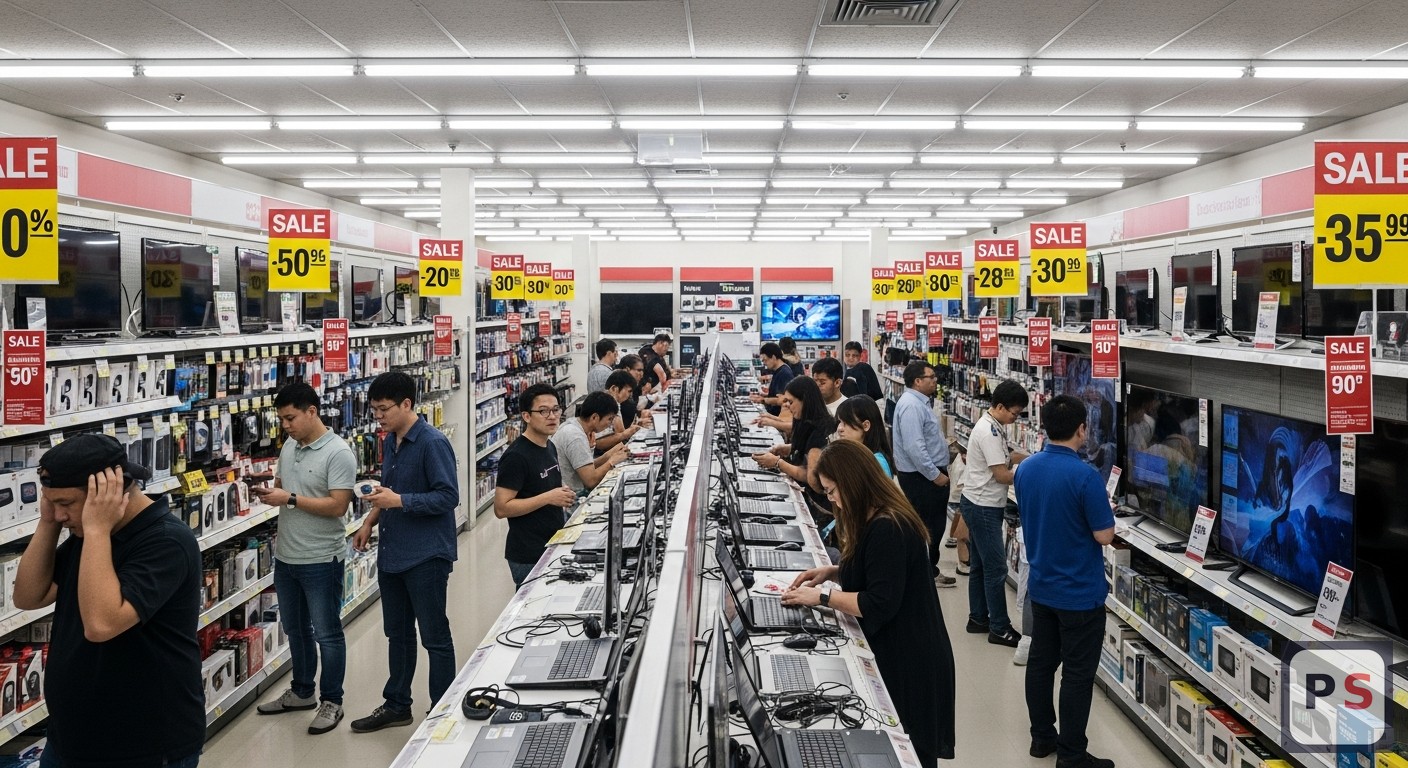
Best Buy dropped a wide-ranging sale event covering TVs, laptops, home appliances, headphones, and gaming gear. According to Consumer Reports’ analysis published this week, some of the headline discounts — like 40% off certain OLED televisions — are real. Others are built on what the industry quietly calls ‘reference pricing’: a high original price that the product was rarely, if ever, actually sold at.
Here’s the thing about reference pricing. It’s not illegal in most countries. But it is deliberately confusing. A TV listed at $1,200 ‘marked down’ to $799 sounds like a $400 saving. But if that TV has been sitting at $799 for the past six months and the $1,200 tag was only active for a week last year, you haven’t saved anything. You’ve just paid the regular price with extra theatre.
Consumer Reports found this pattern across multiple product categories — and it’s not unique to Best Buy or the US. Electronics retailers in Europe, Australia, and Southeast Asia use identical playbooks around public holidays and long weekends. The psychology is the same everywhere: we anchor to the ‘before’ number and feel clever for paying the ‘after’ one.
The 3 Product Categories Worth Watching in the Best Buy Memorial Day Sale 2026
Not everything in this sale is a trap. Consumer Reports specifically pointed to a few categories where the markdowns appear genuinely steep compared to recent 30 and 90-day pricing histories.
| Category | Typical Discount This Weekend | Worth It? |
|---|---|---|
| Laptops (previous gen) | Up to 35% off | ✅ Often genuine |
| OLED / QLED TVs (65″+) | 20–40% claimed | ⚠️ Check price history first |
| Wireless headphones | 15–30% off | ✅ Mostly real cuts |
| Large appliances (fridges, washers) | Up to 25% claimed | ⚠️ Very model-dependent |
| Smart home / accessories | 10–20% off | ❌ Usually available year-round |
The previous-generation laptop category is where I’d actually focus energy this weekend. When a new chip generation drops — and we’ve seen several in the past 12 months — retailers need to clear the old stock. That pressure is real, and it usually produces real discounts. A $999 laptop from late 2025 doing 30–35% off right now is probably a legitimate cut. For most people’s actual tasks, last year’s chip is completely fine.

The 90-Day Rule — And Why Retailers Hope You Don’t Know It
Here’s something I stumbled across in the ConsumerAffairs piece published alongside Consumer Reports’ coverage this week. Many countries — including most of the EU and Canada — have consumer protection guidelines that suggest a ‘sale’ price should only be advertised against a price the product was sold at for a meaningful period in the previous 90 days.
Retailers know this window. Some game it by briefly inflating prices for a week or two before a major sale event, just long enough to technically justify the markdown. It’s a grey area legally, but it’s a bright red flag as a shopper.
‘The best sale price is one that reflects a genuine reduction from what was previously charged — not a number the retailer invented to make the discount look bigger.’ — Consumer Reports, May 2026
The simplest protection? Before you buy anything this weekend, type the exact product model number into a search engine followed by ‘price history’. Free tools exist for almost every major retailer globally that show you a graph of what that item actually cost over time. If the line has been flat at the ‘sale’ price for three months, you’re not getting a deal — you’re getting a story.
- Your Health Influencer Probably Has No Medical Degree — Here’s What Pew Research Just Found
- La vente de Memorial Day de Best Buy 2026 est en cours — Découvrez les offres que la plupart des acheteurs risquent de manquer avant lundi
- Las copias de destinos están reduciendo los presupuestos de vacaciones a la mitad — Y la mayoría de los viajeros aún no han oído hablar de ellas
The Open-Box Angle Most Shoppers Completely Ignore
This is the part I had no idea about until I dug into the ConsumerAffairs coverage more carefully. During major sale events, Best Buy — and most large electronics retailers globally — significantly expand their certified open-box inventory. These are returns, display models, or lightly used units that were returned within the return window, inspected, and repackaged.
The discounts here are often structurally deeper than headline sale prices, because retailers need to clear this stock fast and it doesn’t fit neatly into a marketing banner. A $1,100 laptop returned once, inspected, and certified might be listed at $720 with no fanfare. While the homepage screams ‘25% off!’ on a new unit at $900, the open-box version of something slightly better is sitting there for $180 less than that.
I’m not entirely sure why more people don’t look here first. My guess — and this might be wrong — is that ‘open box’ still carries a faint psychological stigma, even when the item is functionally brand new. That stigma is essentially a discount you can collect for free.
Best Buy Memorial Day Sale 2026: The One-Minute Checklist Before You Buy
Look, I’m not saying don’t shop the sale. Some of these deals are real and this weekend is genuinely one of the better moments in the year to buy electronics. But spending 90 seconds before each purchase can be the difference between a real 30% saving and paying exactly what you’d pay in July with a colourful banner draped over it.
Before you tap buy: search the model number’s price history. Check if an open-box version exists on the same page. Ask yourself honestly whether you’ve wanted this for weeks or whether the sale created the want. And if the discount is under 15%? That product is almost certainly available at that price somewhere, sometime, without the urgency theatre.
The sale ends Monday. But the model numbers don’t disappear Monday. That’s the thing they really don’t want you to remember.
Deal or Fake Markdown? Calculator
Enter the original price and current sale price to see if you’re actually saving — or being played.
Last updated: May 30, 2026