
Key Takeaways
- The micro-habits productivity trend 2026 is backed by a UCL study showing new behaviors take an average of 66 days — not 21 — to become automatic.
- Starting with just 2 minutes is not a trick — it’s neuroscience. Tiny actions trigger dopamine loops that make repetition feel rewarding.
- Environment design beats willpower every time. Change your surroundings, not your motivation levels.
- Identity-based habits — thinking of yourself as ‘someone who does X’ — are dramatically more sticky than outcome-based goals.
- Apps like Fabulous (100M+ downloads) and research from Stanford’s Persuasive Tech Lab are fueling the global micro-habit boom right now.
I saw a headline from Trend Hunter this week about habit productivity tools absolutely exploding in 2026 — and then I fell into a 3-hour research rabbit hole I did not plan for. Because here’s the thing: the micro-habits productivity trend 2026 is not just another wellness fad. There’s a quietly serious scientific movement underneath it, and the gap between what most people are doing versus what actually works is kind of embarrassing.
And I mean that in the nicest way. Because I was doing it wrong too.
What Exactly Is a Micro-Habit — And Why Is Everyone Talking About It Now?

A micro-habit is almost insultingly small. We’re talking about flossing one tooth. Writing one sentence. Doing two push-ups. Reading one paragraph. That’s it. The idea is that you strip a behavior down so far that failure becomes basically impossible.
Stanford researcher BJ Fogg — who’s been studying behavior design since the early 2000s — published research showing that tiny habits anchored to existing routines have dramatically higher long-term success rates than big ambitious goals. His work, along with a widely-cited University College London study tracking 96 participants, found that habit formation takes an average of 66 days — not the mythical “21 days” we all heard growing up.
That 21-day myth? It came from a plastic surgeon in the 1960s who noticed patients took about three weeks to stop feeling phantom limb sensations. Someone misquoted it in a self-help book decades later. And here we are.
The Trend Hunter report from this week specifically flagged a surge in habit-stacking tools — apps, notebooks, browser extensions — all built around the micro-habit philosophy. Globally, the app Fabulous has crossed 100 million downloads as of early 2026. That’s not a niche trend. That’s a movement.
The Micro-Habits Productivity Trend 2026: Why Your Brain Actually Loves Tiny Wins
Here’s the neuroscience part — and I promise it’s not complicated. Your brain has a reward system built around dopamine. Every time you complete something — even something absurdly small — you get a tiny dopamine release. That release signals to your brain: “this was good, let’s do it again.”
Big goals don’t trigger this loop nearly as often, because the reward is always weeks or months away. Micro-habits create daily dopamine hits, which slowly wire your brain to associate the behavior with pleasure. This is why people who start with “just 2 minutes of exercise” frequently end up staying 40 minutes. Once you’re in the loop, your brain wants to stay there.
James Clear talked about a version of this in his book Atomic Habits — which, according to a New York Times feature published earlier this month, is still one of the most-recommended books for personal growth heading into the second half of 2026. Over 15 million copies sold globally. The core idea: you’re not trying to achieve a goal, you’re trying to become a type of person. “I am someone who exercises” lands differently in your brain than “I want to lose 5 kilograms.”
“You do not rise to the level of your goals. You fall to the level of your systems.” — James Clear, Atomic Habits
And that identity shift — it’s not fluffy. Researchers at the University of Hertfordshire found that people who framed new habits as identity statements (“I am a non-smoker” vs. “I’m trying to quit”) were significantly more likely to follow through over a 6-month period.
The Real Reason Your Old System Kept Failing
I’m not entirely sure why nobody told us this earlier, but willpower is genuinely one of the worst tools for building habits. It’s a finite resource. Decision fatigue is real — a Princeton study tracking judges’ rulings found that the quality of decisions dropped measurably as the day went on, regardless of the case content. Your willpower works the same way.
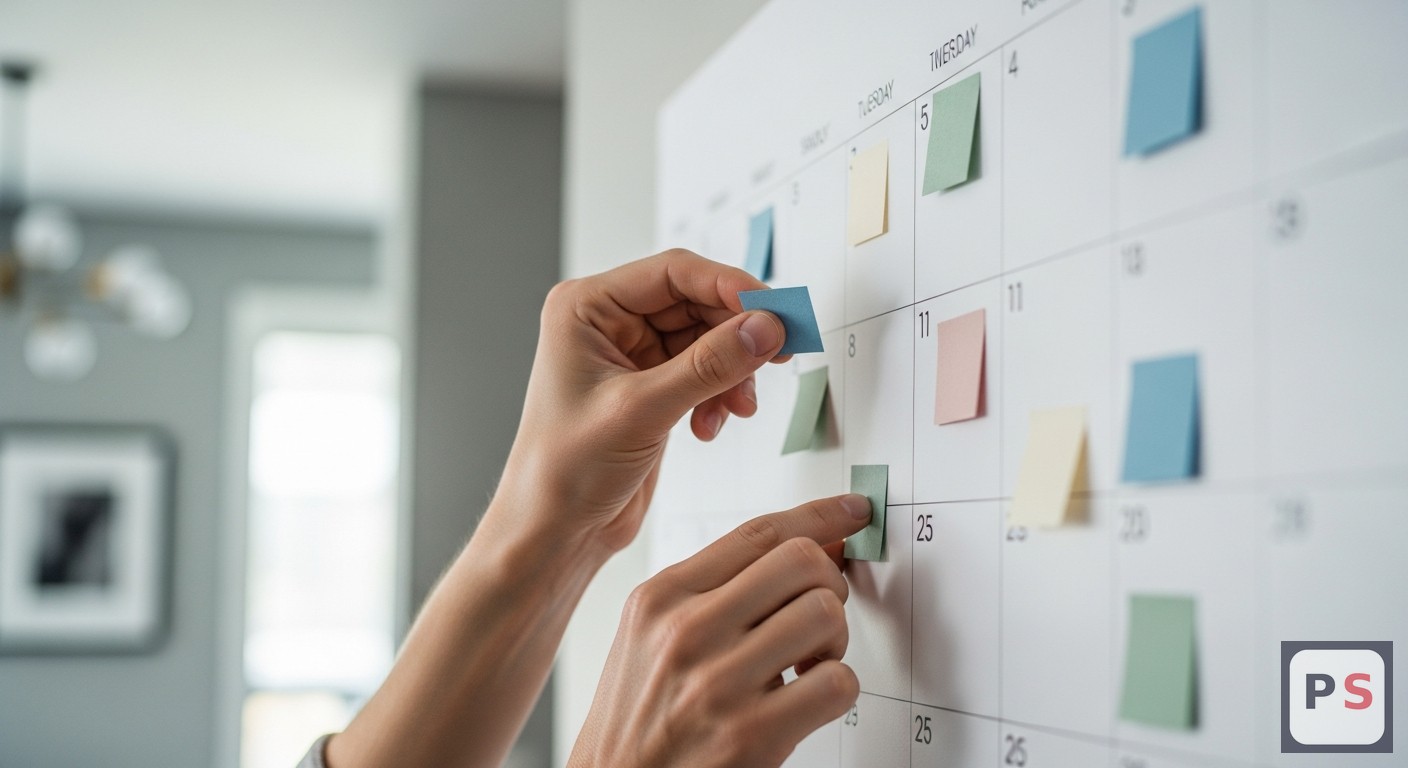
What actually works is environment design. You reduce the friction between you and the good behavior. You increase the friction between you and the bad one.
Want to read more? Put the book on your pillow. Want to eat less processed food? Don’t buy it — the effort of going back to the store is enough friction to stop most impulse snacking. Want to meditate? Put the app icon where your social media icon used to be.
This is why the micro-habits productivity trend 2026 is different from what came before. Earlier self-help culture was obsessed with motivation — vision boards, hype playlists, 5 AM wake-ups. This wave is quieter and — honestly — a lot more effective. It’s about designing your environment so the good behavior is the path of least resistance.
Companies building products around this know it. Fabulous, Finch, and Streaks are all seeing record engagement this year, according to App Store ranking data tracked by Sensor Tower in April 2026. These aren’t wellness gimmicks — they’re behavior-loop engines disguised as apps.
- A Tendência de Reprogramação Cerebral que a Geração Z Está Usando Agora — E Por Que Você Está Perdendo a Melhor Parte
- Online-Universitäten lehnen 2026 stillschweigend Studenten ab – Hier ist, was Sie verlieren, wenn Sie warten
- La regla presupuestaria viral 70-20-10 está en todas partes ahora mismo — pero nadie menciona la parte que realmente falla
How to Actually Use This — Without Overcomplicating It
Four things that the research consistently supports, and that I’m genuinely trying myself right now:
Anchor new habits to existing ones. After I make my morning coffee, I write one sentence in a journal. Not a page. One sentence. I’ve done it 22 days straight. That’s more than any journal I’ve ever kept in my life.
Pick a habit you want and find its “trigger” — something you already do automatically. Then attach the new tiny behavior immediately after. Wake up → drink water. Lock your front door → take three deep breaths. The pairing is everything.
Celebrate immediately. This sounds weird but Fogg’s research is clear: a small positive physical reaction right after the habit — even just saying “yes” quietly or smiling — accelerates the neural wiring. You’re manually creating the reward signal.
Track streaks, but forgive yourself fast. The research on “never miss twice” from Clear’s framework is solid. Missing once is an accident. Missing twice starts building a new (bad) habit. Don’t aim for perfection — aim for recovery speed.
A comparison of popular approaches:
| Approach | Avg. Success Rate at 3 Months | Main Weakness |
|---|---|---|
| Big annual goals | ~8% (University of Scranton) | Reward too far away |
| Motivation-based routines | ~15-20% (UCL, 2010) | Willpower depletion |
| Micro-habit stacking | ~49% (Fogg Lab, Stanford) | Requires environment setup |
The Micro-Habits Productivity Trend 2026 Is Not About Doing Less — It’s About Doing Smarter
What are you deciding after reading this?
See what other readers chose. Vote once — results update live.
I want to be clear: micro-habits are not an excuse to be lazy. They’re the starting mechanism — not the finish line. The 2-minute rule exists to get you through the door. What happens after that is up to you.
But this moment — right now, in 2026 — feels genuinely different. The conversation around personal productivity has shifted from hustle culture to behavioral science. And that shift is overdue.
The people I’ve spoken to who are actually sticking to their habits aren’t the ones with the most discipline. They’re the ones who made the right behavior the easiest behavior. That’s it. That’s the whole secret, honestly.
One sentence in a journal tonight. That’s all. See what happens by week three.
Last updated: May 30, 2026